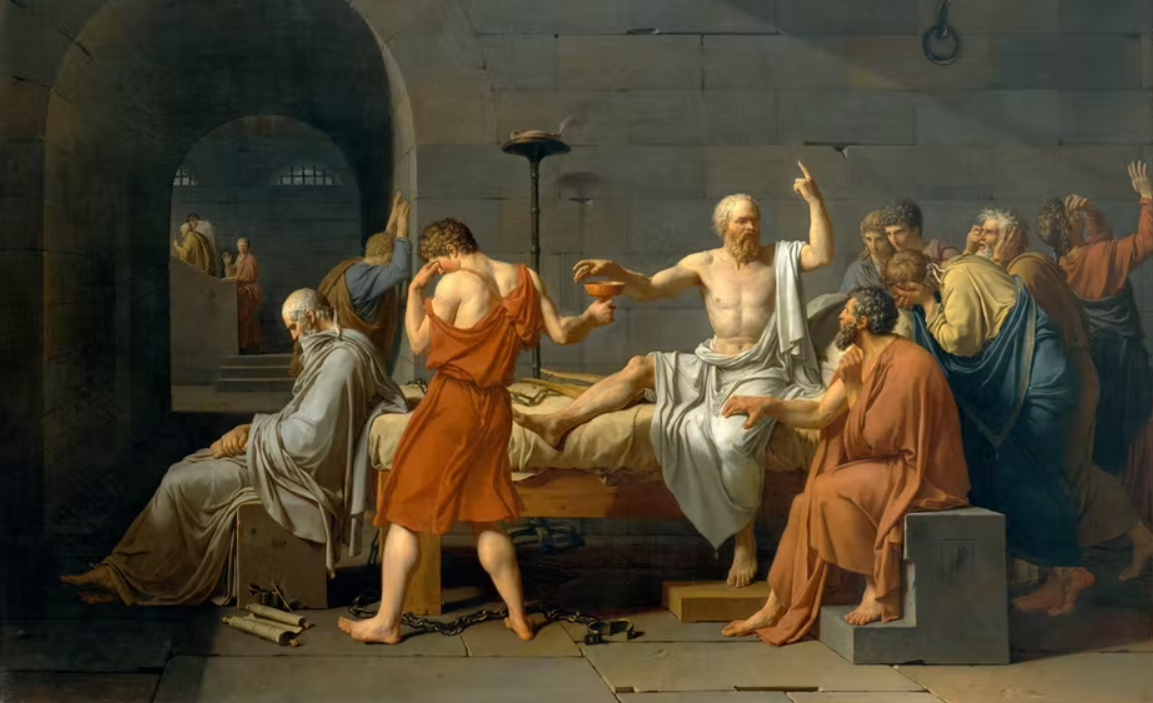
Walter Burley

Walter Burley (c. 1275 – c. 1344) was an English philosopher and logician who was active during the 14th century. He is best known for his work in natural philosophy, particularly his commentary on Aristotle’s Physics. Burley was also an important figure in the development of medieval logic, and he made significant contributions to the debate on the nature of universals.

Burley was born in Burley-in-Wharfedale, a village in West Yorkshire, England. He studied at Oxford University, where he became a pupil of William of Ockham, one of the most influential philosophers of the medieval period. Burley was strongly influenced by Ockham’s nominalism, which held that universals are not real entities but are only names or concepts that we use to classify particular things.

After completing his studies at Oxford, Burley became a Franciscan friar and entered the order’s studium generale in Paris, where he continued his philosophical studies. He soon became a prominent member of the Parisian philosophical community, and he participated in many of the debates and discussions that were taking place at the time.

Burley’s most important contributions to philosophy were in the area of natural philosophy. He wrote commentaries on Aristotle’s Physics, De caelo et mundo, and Meteorologica, which were widely read and influential. In his commentary on the Physics, Burley developed a modified version of Aristotelian physics that was more compatible with Ockham’s nominalism. He argued that the laws of nature were not necessary, but were contingent on the will of God. This view was known as divine voluntarism, and it had important implications for the way that natural philosophy was practiced in the late medieval period.

Burley was also an important figure in the development of medieval logic. He wrote several works on logic, including a commentary on Aristotle’s Organon and a treatise on supposition theory, which was a branch of medieval logic concerned with the ways in which terms could be used to refer to things in the world. Burley was one of the leading proponents of the so-called “moderate realism” position on universals, which held that universals exist in particular things but have a real existence of their own as well. This view was a compromise between the extreme realism of figures such as Thomas Aquinas and the nominalism of Ockham.

Burley’s work in natural philosophy and logic was widely influential in the later medieval period. His ideas were discussed and debated by many other philosophers, and they helped to shape the development of philosophy in the early modern period. For example, the divine voluntarism that Burley developed in his commentary on the Physics was a precursor to the voluntarism of figures such as John Duns Scotus and William of Ockham, who were important philosophers in the 14th and 15th centuries.

In addition to his work in natural philosophy and logic, Burley also wrote on a variety of other topics. He wrote a treatise on the nature of the soul, in which he argued that the soul was a substantial form that gave life to the body. He also wrote on political philosophy, arguing that the ruler had a duty to govern justly and that the people had a right to resist unjust rule. Burley’s political ideas were influential in the later medieval period, and they were cited by figures such as Marsilius of Padua and John of Paris.

Burley’s legacy in the history of philosophy is significant. His ideas on natural philosophy and logic helped to shape the development of philosophy in the late medieval period, and his work was influential in the early modern period as well.

Walter Chatton

Walter Chatton (c. 1290-1343) was an English Franciscan philosopher and theologian who made significant contributions to the debates in Oxford during the 14th century. Chatton was born in the village of Chatton in Northumberland, England, and studied at Oxford University, where he eventually became a Fellow of Merton College. He is best known for his work on the problem of universals, which was one of the central issues in medieval philosophy.

Chatton was a member of the Franciscan Order, which was known for its commitment to poverty and its emphasis on preaching and teaching. He was deeply influenced by the works of his Franciscan predecessors, such as Bonaventure and John Duns Scotus, as well as by the writings of Aristotle and Avicenna. Chatton was known for his ability to synthesize these diverse sources of thought and to develop his own original positions on philosophical and theological issues.

One of Chatton’s main contributions to medieval philosophy was his work on the problem of universals, which concerned the nature of general terms such as “man” or “tree.” This problem had been debated by philosophers for centuries, and there were several competing theories about the relationship between these terms and the individual objects they referred to. One of the most influential theories was the nominalist view, which held that general terms were merely names that we gave to groups of similar objects, rather than real entities in themselves.

Chatton rejected this nominalist view and argued for a more moderate position known as “moderate realism.” According to Chatton, general terms referred to real entities that he called “common natures,” which were distinct from individual objects but still existed in the world. These common natures were not separate substances or entities, but were rather aspects or features of individual objects that allowed us to classify them under general terms.

Chatton’s moderate realism was influential in later medieval philosophy, and it helped to pave the way for the more sophisticated theories of universals developed by later thinkers such as John Buridan and William of Ockham. Chatton’s work also had implications for theology, as it allowed for a more nuanced understanding of the relationship between God and the created world.

Another important area of Chatton’s work was his defense of the doctrine of divine foreknowledge and human freedom. This was a contentious issue in medieval theology, as some theologians believed that if God knows everything that will happen in the future, then human beings cannot have genuine free will. Chatton argued that God’s knowledge of future events did not necessitate those events or limit human freedom. Instead, he held that God’s knowledge was causally neutral, and that it did not determine what would happen in the future.

Chatton’s views on divine foreknowledge and human freedom were influenced by his Franciscan background and his commitment to the idea of human autonomy. He believed that human beings had the ability to make free choices, even in the face of God’s foreknowledge, and that this was essential for a proper understanding of morality and ethics.

In addition to his work on universals and divine foreknowledge, Chatton also made significant contributions to the fields of metaphysics and epistemology. He was interested in the nature of causation and argued that causal relations were not necessary relations, but rather contingent ones that depended on God’s will. He also developed a theory of knowledge based on the idea of “intuitive cognition,” which held that we can have immediate knowledge of certain truths without the need for inference or argumentation.

Chatton’s philosophy was highly influential in his own time and in the centuries that followed. He was admired by his contemporaries for his intellectual rigor and his ability to engage in debates on complex philosophical and theological issues.

Siger of Courtrai

Siger of Courtrai (c. 1240 – 1284) was a prominent philosopher in the High Middle Ages, who played a significant role in the development of Scholasticism. He was born in Courtrai, a city located in the present-day region of Flanders, Belgium. Siger is best known for his defense of Averroism, a philosophical doctrine that was controversial in medieval Christian theology.

Siger studied at the University of Paris, where he became a member of the Faculty of Arts in 1266 and a master of theology in 1276. He was also a member of the Confraternity of Penitents, a lay group that was associated with the Franciscan Order. Siger was a close associate of the famous philosopher and theologian Thomas Aquinas, who was one of his teachers at the University of Paris.

Siger’s most famous work is his Commentary on Aristotle’s Physics, which he wrote in collaboration with the philosopher Boethius of Dacia. In this work, Siger defends the Aristotelian doctrine of natural philosophy against attacks by the Franciscan theologians who accused it of being incompatible with Christian theology. Siger argues that natural philosophy and theology are distinct but compatible domains of knowledge, and that the natural world can be studied and understood by reason alone, without recourse to divine revelation.

Siger is best known for his defense of Averroism, a philosophical doctrine that was named after the famous Islamic philosopher Averroes. Averroism held that there is only one intellect for all human beings, and that this intellect is separate from the individual human soul. According to Averroism, the individual human soul is mortal and perishes with the body, while the intellect is immortal and eternal.

Siger’s defense of Averroism was controversial, as it was seen as incompatible with Christian theology. The Christian doctrine of the soul holds that each individual has a unique and immortal soul that is created by God. Siger argued, however, that Averroism was compatible with Christian theology, and that the immortal intellect was not incompatible with the Christian doctrine of the soul.

Siger’s views on the relationship between reason and faith were also controversial. He believed that reason was capable of understanding the natural world, and that faith was necessary only for understanding spiritual and theological truths. This view was seen as undermining the authority of the Church, which held that faith was necessary for salvation.

Siger’s views were condemned by the Bishop of Paris in 1277, who issued a list of 219 propositions that were deemed heretical. Siger was specifically named in the list, which included many of the key tenets of Averroism. The condemnation of Siger’s views led to a significant controversy in the University of Paris, with many of his colleagues defending his views and arguing that they were not incompatible with Christian theology.

Despite the controversy surrounding his views, Siger’s work had a significant impact on the development of Scholasticism. His defense of the Aristotelian doctrine of natural philosophy helped to establish it as a legitimate area of inquiry in medieval Christian theology. His defense of Averroism also contributed to the development of the Renaissance, as his views on the nature of the human intellect were influential in the works of the Italian humanist Marsilio Ficino.

In conclusion, Siger of Courtrai was a prominent philosopher in the High Middle Ages, who played a significant role in the development of Scholasticism. His defense of the Aristotelian doctrine of natural philosophy and his controversial defense of Averroism had a lasting impact on the development of Western philosophy.

Durand of St. Pourcain

Durand of St. Pourcain (c. 1270 – 1334) was a French Dominican theologian and philosopher. He was born in the small town of St. Pourcain-sur-Sioule, located in the central region of Auvergne, France. Durand is known for his contributions to the fields of metaphysics, natural theology, ethics, and political theory.

Durand studied at the University of Paris, where he earned his baccalaureate in theology. He then joined the Dominican Order, and later returned to the University of Paris to teach. In 1313, he was appointed regent master of theology at the university, where he taught until his death in 1334.

Durand’s most famous work is his Commentary on the Sentences of Peter Lombard, a four-volume commentary on Lombard’s Sentences, which was the standard theological text in medieval universities. Durand’s commentary, which he began writing in 1314 and completed in 1321, covers a wide range of topics, including the nature of God, the problem of evil, the nature of the human soul, and the sacraments.

One of Durand’s main contributions to metaphysics is his concept of “formal distinction.” He argued that a formal distinction exists between two things that share the same essence but differ in some aspect, such as a stone and a statue made of the same material. Durand’s formal distinction was intended to reconcile the views of the Realists and Nominalists, two opposing schools of thought in medieval metaphysics.

Durand also made important contributions to the field of natural theology. He believed that it was possible to prove the existence of God through reason alone, without relying on revelation. He argued that the concept of causality, which is fundamental to the natural sciences, implies the existence of an ultimate cause, which is God.

In ethics, Durand argued that the ultimate goal of human life is to achieve happiness, which he defined as the attainment of the beatific vision, or the direct vision of God in the afterlife. He believed that this goal could be achieved through a life of virtue, which is characterized by the pursuit of the four cardinal virtues of prudence, justice, fortitude, and temperance.

Durand also wrote on political theory, arguing that the authority of the king is derived from God and that the king’s power is limited by natural law. He believed that the king had a duty to promote the common good and that he should be guided by reason and justice in his decision-making.

Despite his many contributions to philosophy and theology, Durand’s ideas were controversial, and he was criticized by some of his contemporaries. For example, the French philosopher and theologian John Duns Scotus accused Durand of confusing the concept of being with that of essence.

In conclusion, Durand of St. Pourcain was an important figure in medieval philosophy and theology. His work on metaphysics, natural theology, ethics, and political theory made significant contributions to these fields. Although his ideas were controversial at times, his contributions to medieval thought have had a lasting impact on the development of Western philosophy.

William of Pagula

William of Pagula, also known as William of Pägau, was a prominent medieval philosopher and theologian who lived during the 14th century. He is best known for his commentary on the Sentences of Peter Lombard, which was widely influential in the late Middle Ages. Despite his importance in the history of philosophy, relatively little is known about his life.

William was born in the town of Pagula in Styria, which is now part of Austria, in the early 14th century. He likely received his education at the University of Paris, where he studied under some of the most famous philosophers of his time, including John Duns Scotus and William of Ockham. He went on to become a prominent professor of theology and philosophy at the University of Vienna.

William’s most famous work is his commentary on the Sentences of Peter Lombard, which he wrote sometime in the early 1350s. The Sentences was a standard textbook for theology students during the Middle Ages, and many theologians wrote commentaries on it. William’s commentary was notable for its clarity and concision, as well as its reliance on the writings of Duns Scotus and Ockham.

One of the central themes of William’s commentary is the nature of God. He argues that God is simple and indivisible, and that all of God’s attributes are identical with his essence. This means that God’s goodness, power, and knowledge are not separate properties that can be analyzed independently, but are instead all aspects of the same divine reality.

William also addresses the problem of universals, which was a central issue in medieval philosophy. The problem of universals concerns the nature of general concepts, such as “man” or “redness.” Are these concepts real entities that exist independently of the objects that instantiate them, or are they just names that we give to groups of similar objects? William’s position on this issue is somewhat unclear, but he seems to reject both extreme views, arguing instead that concepts have a sort of intermediate reality that is dependent on both the mind and the objects that instantiate them.

Another important topic that William discusses in his commentary is the relationship between faith and reason. He argues that faith is necessary for salvation, but that reason also has an important role to play in theology. In particular, reason can help us understand and interpret the truths that are revealed by faith. However, reason must always be subject to faith, and cannot contradict the teachings of the Church.

William also wrote several other works, including commentaries on Aristotle’s Metaphysics and Physics, as well as a treatise on the nature of the soul. His works were highly influential in the late Middle Ages, and were studied by many later philosophers, including John Wycliffe and Martin Luther.

Despite his importance in the history of philosophy, relatively little is known about William’s life outside of his writings. Some scholars have speculated that he may have been a member of the Franciscan order, due to his close association with Duns Scotus and Ockham, who were both Franciscans. However, there is no concrete evidence to support this theory.

In conclusion, William of Pagula was an important medieval philosopher and theologian, whose commentary on the Sentences of Peter Lombard was widely influential in the late Middle Ages. He was a student of some of the most famous philosophers of his time, including John Duns Scotus and William of Ockham, and went on to become a prominent professor of theology and philosophy at the University of Vienna. His work is notable for its clarity and concision, as well as its reliance on the writings of Duns Scotus and Ockham.

Peter Auriol

Peter Auriol (c. 1280-1322) was a prominent philosopher and theologian of the late medieval period. He was a member of the Franciscan order and studied at the University of Paris, where he became a professor of theology and one of the leading figures of the School of Franciscan Theology. Auriol was known for his work on metaphysics, theology, and philosophy of mind, as well as his contributions to the debates on the nature of universals and the problem of divine foreknowledge.

Life and Education

Peter Auriol was born around 1280 in the village of Auriol in Provence, France. He entered the Franciscan order at an early age and studied at the University of Paris. He earned his Master of Arts degree in 1302 and his Bachelor of Theology degree in 1305. He became a professor of theology at the University of Paris in 1310, where he remained until his death in 1322.

Philosophical and Theological Contributions

Auriol was a prolific writer and commentator on a wide range of philosophical and theological topics. His most important works include his commentary on Peter Lombard’s “Sentences,” his “Ordinatio” (a systematic exposition of theology), and his “Scriptum super primum Sententiarum” (a commentary on the first book of the “Sentences”).

One of Auriol’s most important contributions to philosophy was his work on the nature of universals. Auriol argued that universals do not exist independently of particular things, but rather are grounded in the individual things that instantiate them. He rejected the idea that universals are Platonic Forms or Aristotelian essences that exist in a separate realm of reality. Rather, he held that universals are mental concepts that are formed through abstraction from particular things.

Auriol’s views on universals were influential in the debates of the time, and his position came to be known as “moderate realism.” His views on the nature of universals were a departure from the extreme realism of his predecessors such as Thomas Aquinas, who held that universals have an independent existence and are not dependent on particular things.

Auriol also made significant contributions to the debate on the problem of divine foreknowledge. He rejected the view of some of his contemporaries that God’s foreknowledge of future events is the cause of those events. Instead, he argued that God’s foreknowledge is based on his omniscience and that human free will is not compromised by God’s knowledge of future events.

Auriol’s views on divine foreknowledge were influential in the debates of the time, and his position came to be known as “compatibilism.” His views were a departure from the views of his predecessors such as Duns Scotus, who held that human free will is incompatible with God’s foreknowledge of future events.

Auriol also made significant contributions to the philosophy of mind. He argued that the mind is a distinct substance that is capable of knowing and thinking. He rejected the view of some of his contemporaries that the mind is merely a passive recipient of sense data. Instead, he held that the mind is an active participant in the process of knowledge acquisition and that it is capable of forming concepts and making judgments.

Auriol’s views on the nature of the mind were influential in the debates of the time, and his position came to be known as “intellectualism.” His views were a departure from the views of his predecessors such as John Duns Scotus, who held that the mind is a passive recipient of sense data.

Radulphus Brito

Radulphus Brito (c. 1270 – c. 1320) was a prominent philosopher and logician of the late medieval period. He is known for his work on logic, metaphysics, and natural philosophy, as well as for his commentary on the works of Aristotle and other prominent philosophers.

Early Life and Education

Little is known about Radulphus Brito’s early life. He was likely born in England around 1270 and may have received his early education in Oxford. He was a member of the Franciscan order and later studied at the University of Paris, which was one of the most important centers of learning in Europe at the time.

Career and Contributions

Radulphus Brito was a highly regarded philosopher and logician during his lifetime. He was particularly interested in the study of logic and made significant contributions to the field. He wrote a number of works on logic, including a commentary on Aristotle’s “Organon” and a treatise on the syllogism.

In addition to his work on logic, Radulphus Brito also made significant contributions to the study of metaphysics and natural philosophy. He was interested in the concept of causation and the nature of substance, and he wrote extensively on these topics. He also wrote on the nature of motion and the relationship between matter and form.

Radulphus Brito was a prolific writer and commentator on the works of other philosophers. He wrote commentaries on the works of Aristotle, Averroes, and Avicenna, among others. His commentaries were highly regarded and were widely read and studied by scholars throughout Europe.

One of Radulphus Brito’s most important works was his commentary on Aristotle’s “Metaphysics.” In this commentary, he provided a detailed analysis of Aristotle’s ideas about substance, causation, and other key concepts. He also offered his own insights and interpretations of these concepts, which were influential in the development of medieval philosophy.

Later Life and Legacy

Radulphus Brito died around 1320, but his ideas and contributions to philosophy continued to be influential for centuries. His work in the field of logic was particularly significant, and his commentary on the works of Aristotle and other philosophers was widely read and studied by scholars throughout Europe.

Radulphus Brito was also an important figure in the development of the Franciscan intellectual tradition. He was a member of the Franciscan order and his philosophical ideas were informed by his Franciscan spirituality. He believed that philosophy and theology were complementary disciplines and that both were necessary for a complete understanding of the world and our place in it.

Conclusion

Radulphus Brito was a significant figure in the history of medieval philosophy. He was a prominent logician and philosopher who made significant contributions to the study of logic, metaphysics, and natural philosophy. His commentaries on the works of Aristotle and other philosophers were highly regarded and were influential in the development of medieval philosophy.

Radulphus Brito’s ideas and legacy continue to be studied and admired by scholars today. His work in the field of logic has been particularly influential, and his commentary on the works of Aristotle and other philosophers remains an important resource for scholars of medieval philosophy.

Thomas of Erfurt

Thomas of Erfurt (c. 1300 – c. 1358) was a German philosopher who was known for his work in the field of metaphysics and his commentary on the works of Aristotle. He was also a member of the Franciscan order and served as a professor of philosophy at the University of Paris.

Early Life and Education

Thomas of Erfurt was born around 1300 in the city of Erfurt in what is now Germany. He joined the Franciscan order at a young age and received his education in philosophy and theology at the Franciscan Studium Generale in Erfurt. He was later sent to study at the University of Paris, which was one of the most prestigious universities in Europe at the time.

Career and Contributions

Thomas of Erfurt was a prolific writer and philosopher who made significant contributions to the field of metaphysics. He was particularly interested in the concept of causation and the nature of substance, and he wrote extensively on these topics.

One of Thomas of Erfurt’s most significant contributions to philosophy was his commentary on the works of Aristotle. He was one of the most prominent Aristotelian scholars of his time and his commentary on Aristotle’s “Metaphysics” was widely read and influential. In his commentary, Thomas of Erfurt provided a detailed analysis of Aristotle’s ideas about causation and substance, and he offered his own insights and interpretations of these concepts.

Thomas of Erfurt was also interested in the concept of universals and the nature of knowledge. He believed that knowledge was based on a universal concept, which he called the “intelligible species.” According to Thomas of Erfurt, the intelligible species was a mental representation of a universal concept that allowed us to understand and know things in the world.

Thomas of Erfurt was also interested in the concept of free will and the relationship between divine providence and human choice. He believed that human beings had the ability to make choices and that these choices were not predetermined by God. However, he also believed that God’s providence was involved in the world and that all events were ultimately part of God’s plan.

Later Life and Legacy

Thomas of Erfurt died around 1358, but his ideas and contributions to philosophy continued to be influential for centuries. His work in the field of metaphysics was particularly significant, and his commentary on the works of Aristotle was widely read and studied by scholars throughout Europe.

Thomas of Erfurt was also an important figure in the development of the Franciscan intellectual tradition. He was a member of the Franciscan order and his philosophical ideas were informed by his Franciscan spirituality. He believed that philosophy and theology were complementary disciplines and that both were necessary for a complete understanding of the world and our place in it.

Conclusion

Thomas of Erfurt was a significant figure in the history of medieval philosophy. He was a prominent Aristotelian scholar and his commentary on the works of Aristotle was widely read and influential. He was also interested in a wide range of philosophical topics, including causation, substance, universals, knowledge, free will, and divine providence.

Thomas of Erfurt’s contributions to philosophy were informed by his Franciscan spirituality, and he believed that philosophy and theology were complementary disciplines that were necessary for a complete understanding of the world and our place in it. His ideas and legacy continue to be studied and admired by scholars today.

Raymond Llull

Raymond Llull (c. 1232 – c. 1315) was a medieval philosopher, theologian, and writer who is best known for his pioneering work in the field of computation theory and for his efforts to promote Christian evangelism through reason and persuasion. He is considered one of the most important thinkers of the Middle Ages and his ideas and methods continue to influence modern philosophy and computer science.

Early Life and Education

Raymond Llull was born in Majorca, Spain, around 1232. He was educated in the liberal arts and trained as a knight before embarking on a spiritual journey that would shape the rest of his life. He became a member of the Third Order of St. Francis and devoted himself to the study of theology and philosophy.

Career and Contributions

One of Raymond Llull’s most significant contributions to medieval thought was his work in the field of computation theory. He developed a system of logic and reasoning that he called the “Ars Combinatoria” or “Art of Combination.” This system was based on the idea that all knowledge could be broken down into a finite set of basic concepts, and that these concepts could be combined in various ways to generate new knowledge.

The “Ars Combinatoria” was a precursor to modern computational theory and had a profound impact on the development of logic and mathematics. It was also a significant influence on the work of later philosophers such as Gottfried Leibniz and Charles Sanders Peirce.

In addition to his work in computation theory, Raymond Llull was also a prolific writer and theologian. He wrote extensively on a wide range of subjects, including theology, metaphysics, and ethics. He believed that reason and logic could be used to support Christian evangelism and that the Christian message could be made more compelling through the use of persuasive arguments.

Raymond Llull was also a passionate advocate for interfaith dialogue and believed that Christians should engage in respectful and constructive conversations with members of other religions. He traveled extensively throughout Europe and the Mediterranean and engaged in dialogues with Jewish, Muslim, and Christian scholars. His efforts to promote interfaith understanding and cooperation were ahead of his time and continue to be an inspiration to modern thinkers.

Later Life and Legacy

In his later years, Raymond Llull became increasingly focused on the promotion of Christian evangelism through reason and persuasion. He developed a method for evangelism that he called the “Great Art” or “Ars Magna.” This method involved using logical and rhetorical arguments to persuade non-Christians to convert to Christianity.

The “Ars Magna” was a significant departure from traditional approaches to evangelism, which often relied on coercion or threats of punishment. Raymond Llull believed that the use of reason and persuasion was a more effective way of converting non-Christians to Christianity and that it was consistent with the teachings of Jesus Christ.

Raymond Llull died around 1315, but his ideas and methods continued to influence philosophy and theology for centuries. His work in the field of computation theory was a precursor to modern computer science, and his contributions to the field of logic and reasoning continue to be studied and admired by scholars today.

Conclusion

Raymond Llull was one of the most important thinkers of the Middle Ages and his ideas and methods continue to influence modern philosophy and computer science. His work in the field of computation theory was a precursor to modern computational theory, and his efforts to promote Christian evangelism through reason and persuasion were ahead of his time.

Raymond Llull was a passionate advocate for interfaith dialogue and believed that Christians should engage in respectful and constructive conversations with members of other religions. His legacy continues to inspire modern thinkers and his ideas remain a vital part of the intellectual tradition of the West.

Giles of Rome

Giles of Rome (c. 1243 – 1316), also known as Aegidius Romanus, was an important medieval philosopher and theologian who played a significant role in the development of scholasticism. His work was influential in the development of political and ethical thought in the Middle Ages and beyond.

Early Life and Education

Giles of Rome was born in Rome, Italy, around 1243. He received his education at the University of Paris, where he studied under the great medieval philosopher Thomas Aquinas. He quickly became one of Aquinas’s most prominent students and was heavily influenced by his thought.

Career and Contributions

Giles of Rome began his career as a lecturer at the University of Paris, where he quickly established himself as a leading figure in the field of scholasticism. He was particularly interested in the study of metaphysics, ethics, and politics, and his work in these areas was seen as groundbreaking in his time.

One of Giles’s most significant contributions to medieval thought was his work in political philosophy. He believed that political authority was derived from God, and that rulers had a moral obligation to act in accordance with the divine order. He argued that rulers should be subject to the same moral and ethical principles as their subjects, and that they should be held accountable for their actions.

Giles’s work in political philosophy was heavily influenced by the thought of Aristotle, who believed that political authority was based on the natural order of things. However, Giles also drew on the Christian tradition, particularly the works of Augustine and Aquinas, to develop his own distinctive approach to political thought.

In addition to his work in political philosophy, Giles also wrote extensively on metaphysics and ethics. He believed that the study of nature could provide insights into the nature of God and the universe, and that the natural world was a reflection of the divine order. He also argued that ethical principles were rooted in the natural law, and that human beings had a moral obligation to act in accordance with this law.

Giles’s ideas and teachings had a profound impact on the development of scholasticism and helped to shape the course of medieval philosophy. His work on political philosophy, in particular, was highly influential and helped to establish him as one of the most important thinkers of his time.

Later Life and Legacy

Giles of Rome continued to teach and write throughout his life, and he remained an influential figure in medieval intellectual circles until his death in 1316. His ideas and teachings had a profound impact on the development of scholasticism and helped to shape the course of medieval philosophy.

One of Giles’s most lasting legacies was his contribution to the development of the University of Paris. He played a key role in shaping the curriculum and teaching methods of the university, and he helped to establish it as one of the most important centers of learning in medieval Europe. His influence on the university can still be seen today, and his legacy has helped to shape the course of intellectual history.

Conclusion

Giles of Rome was one of the most important figures in the development of medieval scholasticism. His work in political philosophy, metaphysics, and ethics was highly influential and helped to establish him as one of the most important thinkers of his time. His ideas and teachings had a profound impact on the development of the University of Paris and helped to shape the course of medieval philosophy. His legacy continues to influence modern philosophy and political thought, and his ideas remain a vital part of the intellectual tradition of the West.