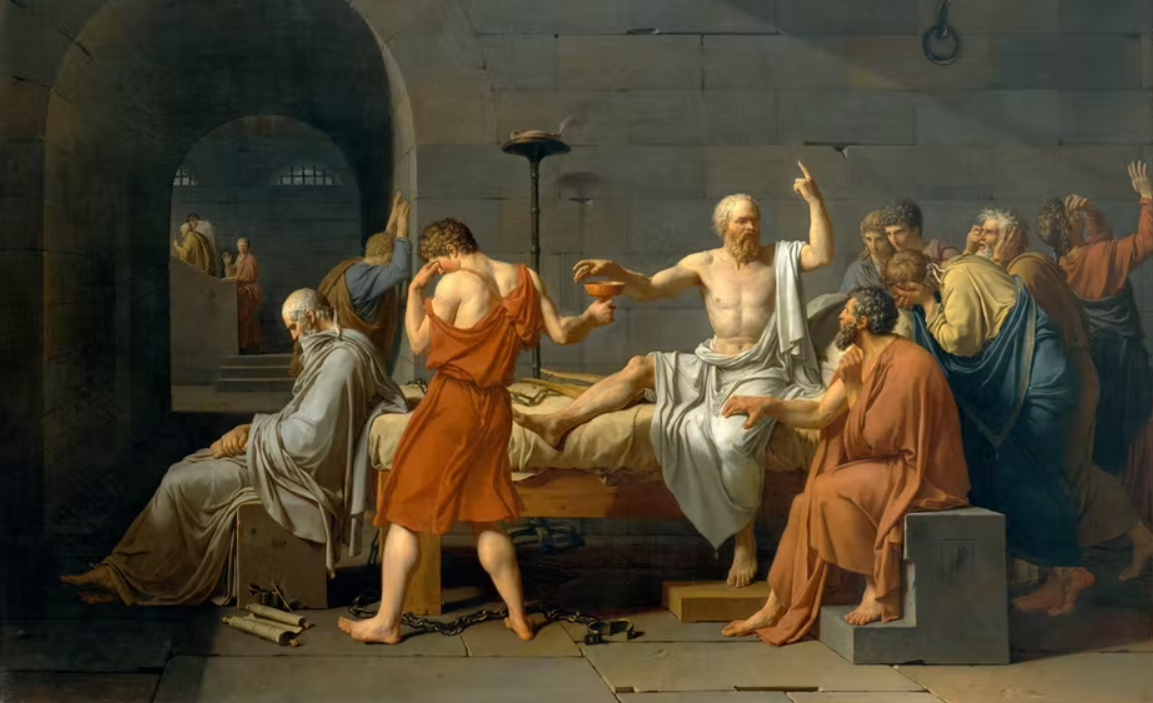
Constantine the African

Constantine the African was a medieval physician and scholar who played a significant role in the development of medicine in Europe during the 11th century. He was born in the city of Carthage in modern-day Tunisia, and his work was instrumental in the revival of medical knowledge and practice in Europe during the High Middle Ages.

Early Life and Education

Very little is known about Constantine’s early life. It is believed that he was born into a wealthy and educated family in Carthage, which was then part of the Abbasid Caliphate. As a young man, he studied medicine at the University of Salerno in southern Italy, which was then one of the most renowned centers of medical learning in Europe.

Career and Contributions

After completing his studies, Constantine remained at Salerno, where he became a respected physician and teacher. He also began to translate a number of medical texts from Arabic into Latin, including works by the Greek physician Galen and the Persian physician Avicenna.

Constantine’s translations were instrumental in the revival of medical knowledge and practice in Europe during the High Middle Ages. At the time, most medical knowledge in Europe was limited to a few ancient texts that had been translated into Latin. Constantine’s translations of Arabic texts brought a wealth of new medical knowledge and techniques to Europe, and they helped to lay the groundwork for the development of modern medicine.

One of Constantine’s most significant contributions to medicine was his translation of the “Liber Pantegni,” a comprehensive medical text written by the Persian physician Ali ibn al-Abbas al-Majusi. The “Liber Pantegni” covered a wide range of medical topics, including anatomy, pharmacology, and surgery. It became one of the most important medical texts of the Middle Ages, and it influenced medical practice and education for centuries to come.

Constantine also wrote several original medical treatises, including “Viaticum,” a guide for traveling physicians, and “Isagoge,” a guide to the principles of medical diagnosis. His works were widely read and respected in his time, and they helped to establish Salerno as one of the leading centers of medical learning in Europe.

Death and Legacy

Constantine died in the early 11th century, but his legacy lived on in the many medical texts that he translated and wrote. His contributions to the development of medicine in Europe during the High Middle Ages were significant, and they helped to lay the groundwork for the development of modern medicine.

Today, Constantine is remembered as one of the most important figures in the history of medicine. His translations of Arabic medical texts helped to bring a wealth of new medical knowledge to Europe, and they played a critical role in the revival of medical learning and practice during the High Middle Ages.

Constantine’s influence on medicine can still be seen today in the many medical texts and treatises that he translated and wrote. His legacy continues to inspire medical scholars and practitioners around the world, and his work remains an important part of the history of medicine.

Constantine the African

Constantine the African was a medieval physician and scholar who played a significant role in the development of medicine in Europe during the 11th century. He was born in the city of Carthage in modern-day Tunisia, and his work was instrumental in the revival of medical knowledge and practice in Europe during the High Middle Ages.

Early Life and Education

Very little is known about Constantine’s early life. It is believed that he was born into a wealthy and educated family in Carthage, which was then part of the Abbasid Caliphate. As a young man, he studied medicine at the University of Salerno in southern Italy, which was then one of the most renowned centers of medical learning in Europe.

Career and Contributions

After completing his studies, Constantine remained at Salerno, where he became a respected physician and teacher. He also began to translate a number of medical texts from Arabic into Latin, including works by the Greek physician Galen and the Persian physician Avicenna.

Constantine’s translations were instrumental in the revival of medical knowledge and practice in Europe during the High Middle Ages. At the time, most medical knowledge in Europe was limited to a few ancient texts that had been translated into Latin. Constantine’s translations of Arabic texts brought a wealth of new medical knowledge and techniques to Europe, and they helped to lay the groundwork for the development of modern medicine.

One of Constantine’s most significant contributions to medicine was his translation of the “Liber Pantegni,” a comprehensive medical text written by the Persian physician Ali ibn al-Abbas al-Majusi. The “Liber Pantegni” covered a wide range of medical topics, including anatomy, pharmacology, and surgery. It became one of the most important medical texts of the Middle Ages, and it influenced medical practice and education for centuries to come.

Constantine also wrote several original medical treatises, including “Viaticum,” a guide for traveling physicians, and “Isagoge,” a guide to the principles of medical diagnosis. His works were widely read and respected in his time, and they helped to establish Salerno as one of the leading centers of medical learning in Europe.

Death and Legacy

Constantine died in the early 11th century, but his legacy lived on in the many medical texts that he translated and wrote. His contributions to the development of medicine in Europe during the High Middle Ages were significant, and they helped to lay the groundwork for the development of modern medicine.

Today, Constantine is remembered as one of the most important figures in the history of medicine. His translations of Arabic medical texts helped to bring a wealth of new medical knowledge to Europe, and they played a critical role in the revival of medical learning and practice during the High Middle Ages.

Constantine’s influence on medicine can still be seen today in the many medical texts and treatises that he translated and wrote. His legacy continues to inspire medical scholars and practitioners around the world, and his work remains an important part of the history of medicine.

Lanfranc of Bec

Lanfranc of Bec was an 11th-century Italian Benedictine monk and theologian who served as the Archbishop of Canterbury under William the Conqueror. He is known for his contributions to the development of scholastic theology and his efforts to reform the English church during his tenure as archbishop.

Early Life and Education

Lanfranc was born in Pavia, Italy, around 1005 AD. He was educated at the cathedral school in Pavia, where he studied grammar, rhetoric, and logic. He then went on to study law at the University of Bologna, where he gained a reputation as a brilliant scholar and teacher.

Career and Contributions

In the late 1020s, Lanfranc joined the Benedictine monastery of Bec in Normandy, France. He quickly gained a reputation as a skilled theologian and became known for his ability to reconcile Aristotelian philosophy with Christian theology. In the mid-1050s, he was appointed the prior of the monastery, and his influence grew even further.

In 1066, William the Conqueror invaded England and claimed the English throne. He appointed Lanfranc as the Archbishop of Canterbury in 1070, recognizing his theological and administrative skills. Lanfranc was instrumental in the Norman Conquest’s aftermath, helping to establish Norman rule over the English church.

As archbishop, Lanfranc embarked on a series of reforms aimed at improving the church’s administration and increasing its intellectual and spiritual rigor. He established new cathedrals and monasteries, promoted the study of scripture and theology, and strengthened the discipline of the clergy.

One of Lanfranc’s most significant contributions to the development of Christian theology was his work on the doctrine of transubstantiation, which was central to the church’s understanding of the Eucharist. Lanfranc argued that during the Mass, the bread and wine were transformed into the body and blood of Christ, but that this transformation was not visible or perceptible to the senses. He also emphasized the importance of a rational and logical approach to theological inquiry, which laid the groundwork for the development of scholastic theology in the centuries that followed.

Death and Legacy

Lanfranc died in 1089 at the age of around 84. Although he is remembered primarily as a theologian and church reformer, his influence extended far beyond the church. His emphasis on the importance of reason and logic in theology helped lay the groundwork for the development of medieval scholasticism, which would have a profound impact on philosophy, theology, and science in the centuries that followed.

Lanfranc’s legacy also lives on in the English church, which he helped to reform and strengthen during his tenure as archbishop. His efforts to promote the study of scripture and theology, establish new monasteries and cathedrals, and improve the discipline of the clergy helped to establish a more rigorous and intellectually vibrant church in England.

Today, Lanfranc is remembered as one of the most influential theologians and church leaders of the Middle Ages. His contributions to the development of scholastic theology and his efforts to reform the English church continue to inspire scholars and theologians today, more than nine centuries after his death.

Berengar of Tours

Berengar of Tours was a prominent theologian and teacher in the 11th century. He is best known for his controversial views on the nature of the Eucharist, which challenged the prevailing beliefs of the Catholic Church at the time.

Early Life and Education

Berengar was born in Tours, France, around 999 AD. He received his education at the Cathedral School in Tours, which was known for its rigorous intellectual curriculum. While there, he studied under some of the most prominent theologians of the day and developed a deep interest in the study of scripture and theology.

Career and Contributions

After completing his studies, Berengar became a teacher at the Cathedral School in Tours. He quickly gained a reputation as a brilliant theologian and was known for his ability to synthesize complex theological ideas and make them accessible to his students.

In the mid-11th century, Berengar became embroiled in a controversy over the nature of the Eucharist, which is the central sacrament of the Catholic Church. At the time, the prevailing belief was that during the Mass, the bread and wine used in the sacrament were miraculously transformed into the body and blood of Christ. This transformation was known as transubstantiation.

Berengar challenged this belief, arguing that the bread and wine remained unchanged and that the Eucharist was simply a symbolic representation of Christ’s sacrifice. He believed that the doctrine of transubstantiation was a recent development in church theology and had no basis in scripture or the teachings of the early church fathers.

Berengar’s views sparked a fierce debate within the church, with many of his fellow theologians and church leaders accusing him of heresy. He was called before a series of ecclesiastical councils, where he was forced to recant his views and swear allegiance to the doctrine of transubstantiation.

Despite his public recantations, Berengar continued to hold his controversial views in private and was known to have expressed them to his students and close associates. He was eventually excommunicated by the church and spent the remainder of his life in seclusion, continuing to write and teach but without official recognition or support.

Death and Legacy

Berengar died in 1088, at the age of around 89. Although he was considered a heretic by the Catholic Church at the time of his death, his views on the Eucharist continued to influence later generations of theologians and scholars. In particular, his emphasis on the importance of scripture and the need for a rational and critical approach to theology was a precursor to the intellectual and theological developments of the Renaissance and the Protestant Reformation.

Today, Berengar is remembered as a controversial figure who challenged the dominant beliefs of his time and pushed for a more critical and rational approach to theology. His legacy continues to inspire theologians and scholars who are committed to exploring the complexities of Christian doctrine and the role of reason and critical inquiry in religious belief.

Peter Damian

Peter Damian, also known as Saint Peter Damian, was a monk, theologian, and cardinal who lived in the 11th century. He is known for his contributions to the reform of the Catholic Church, as well as his prolific writing on theology, monasticism, and morality.

Early Life and Education

Peter Damian was born in Ravenna, Italy, in 1007. He was the youngest of several children, and his parents died when he was still young. He was taken in by one of his brothers, who sent him to school in Ravenna.

Peter was a brilliant student and showed a particular aptitude for theology and philosophy. He was eventually sent to study at the University of Parma, where he was introduced to the teachings of Saint Augustine.

Career and Contributions

After completing his studies, Peter Damian became a monk at the Monastery of Fonte Avellana, located in the Apennine Mountains of Italy. He quickly gained a reputation as a gifted preacher and theologian, and he was soon called upon to serve as an advisor to Pope Gregory VII.

Peter was deeply committed to the reform of the Catholic Church, which he saw as being corrupt and in need of renewal. He was particularly critical of the practice of simony, which involved the buying and selling of church offices. He saw this as a grave sin that undermined the spiritual authority of the church.

To combat simony and other forms of corruption, Peter wrote extensively on the need for reform within the church. He called for a return to the simplicity and purity of the early church, and he encouraged church leaders to live a life of poverty and humility. He also advocated for the establishment of stricter rules for the selection of bishops and other church officials.

Peter’s efforts to promote reform within the church were not always well-received, and he faced opposition from some powerful church leaders. However, he remained steadfast in his commitment to his principles and continued to speak out against corruption and injustice.

In addition to his work as a reformer, Peter was also a prolific writer. He wrote extensively on theology, monasticism, and morality, producing a large body of work that has been widely read and studied over the centuries. His writings include sermons, letters, treatises, and other works, many of which have been translated into multiple languages.

Peter’s most famous work is his “Liber Gomorrhianus,” a treatise on the problem of clerical sexual abuse. In this work, Peter denounces the practice of sodomy and calls for the removal of any priests or bishops who engage in such behavior. The work was controversial at the time it was written, and it continues to be studied and debated by scholars and theologians today.

Death and Legacy

Peter Damian died in 1072, at the age of 65. He was canonized by Pope Leo XII in 1828 and is recognized as a saint in the Catholic Church. His contributions to the reform of the church and his prolific writing on theology and morality have made him one of the most important figures in the history of Christianity.

Peter’s legacy continues to live on today, as his works are still studied and admired by scholars and students of theology and philosophy. His commitment to the reform of the church and his dedication to the principles of simplicity, poverty, and humility continue to inspire those who seek to live a life of faith and service to others.

Notker Labeo

Notker Labeo, also known as Notker the German, was a Benedictine monk and scholar who lived in the late 10th and early 11th centuries. He is best known for his contributions to the study of classical literature and for his translations of Latin works into Old High German.

Early Life and Education

Notker was born in the year 950, in the village of Jonschwil, in what is now Switzerland. He was educated at the Benedictine monastery of St. Gall, where he studied under the famous scholar, Ratpert. It was here that he developed a passion for learning and a particular interest in classical literature.

Career and Contributions

Upon completing his studies at St. Gall, Notker became a monk at the Benedictine monastery of St. Gall, where he quickly gained a reputation as a brilliant scholar. He wrote extensively on a variety of subjects, including theology, philosophy, and classical literature.

One of Notker’s most significant contributions was his work on the translation of Latin works into Old High German. He produced a number of translations of classical works, including the “De Consolatione Philosophiae” by Boethius, the “Aeneid” by Virgil, and the “Metamorphoses” by Ovid. These translations were highly regarded by his contemporaries and helped to preserve the works of these great writers for future generations.

Notker was also an important figure in the study of classical literature. He was one of the first scholars to introduce the works of Virgil and Ovid to the medieval world, and he wrote several commentaries on their works. He also produced a Latin translation of the “Orations” of Cicero, which helped to make the works of this great Roman statesman more accessible to scholars of the time.

In addition to his work in classical literature, Notker was also an important theologian. He wrote extensively on the nature of God and the relationship between faith and reason. His most famous work in this area was his “Liber de Nativitate Sancti Johannis Baptistae,” a commentary on the birth of John the Baptist. This work was highly regarded by his contemporaries and helped to shape the development of medieval theology.

Notker was also an important teacher, who trained many of the leading scholars of his time. Among his most famous students were the theologian, Anselm of Canterbury, and the historian, William of Malmesbury.

Death and Legacy

Notker died in the year 1022, at the age of 72. His contributions to scholarship were enormous, and he is regarded as one of the most important scholars of the early medieval period. His translations of classical works into Old High German helped to preserve the works of these great writers for future generations, and his work in theology and philosophy helped to shape the intellectual landscape of medieval Europe.

Notker’s legacy continues to live on today, as his works are still studied and admired by scholars and students of medieval history. His commitment to scholarship and his dedication to the pursuit of knowledge remain an inspiration to all those who seek to understand the world around them.

Abbo of Fleury

Abbo of Fleury, also known as Abbo of Saint-Germain-des-Prés, was a Benedictine monk and scholar who lived in the late 10th and early 11th centuries. He is best known for his contributions to theology, hagiography, and the study of classical literature.

Early Life and Education

Abbo was born in the village of Orléans, France, in the year 945. He was educated at the cathedral school of Chartres, where he studied under the famous scholar, Fulbert of Chartres. It was here that he developed a passion for learning and a particular interest in classical literature.

After completing his studies at Chartres, Abbo traveled to England, where he spent several years studying at the monasteries of Ramsey and Abingdon. It was during this time that he became acquainted with the Anglo-Saxon culture and developed a deep appreciation for the language and literature of the region.

Career and Contributions

Upon returning to France, Abbo joined the Benedictine monastery of Fleury, where he quickly gained a reputation as a brilliant scholar. He wrote extensively on a variety of subjects, including theology, philosophy, and classical literature.

One of Abbo’s most significant contributions was his work on hagiography, the study of the lives of saints. He wrote several important works on the subject, including a biography of the saint, Edmund, king of East Anglia, who had been martyred by the Danes in the 9th century. Abbo’s biography of Edmund was widely read throughout Europe and helped to popularize the cult of the saint.

Abbo was also an important theologian, who wrote extensively on the nature of God and the relationship between faith and reason. His most famous work in this area was “Quaestiones disputatae,” a series of theological debates that he conducted with his students at Fleury. These debates were highly regarded by his contemporaries and had a significant influence on the development of medieval theology.

In addition to his work in hagiography and theology, Abbo was also an important figure in the study of classical literature. He was one of the first scholars to introduce the works of Virgil and Ovid to the medieval world, and he wrote several commentaries on their works. He also produced a Latin translation of the Iliad and the Odyssey, which helped to preserve the works of Homer for future generations.

Abbo’s contributions to scholarship were not limited to his written works. He was also an important teacher, who trained many of the leading scholars of his time. Among his most famous students were the theologian, Anselm of Canterbury, and the historian, William of Malmesbury.

Death and Legacy

Abbo died in the year 1004, at the age of 59. His contributions to scholarship were enormous, and he is regarded as one of the most important scholars of the early medieval period. His works on hagiography, theology, and classical literature helped to shape the intellectual landscape of medieval Europe and influenced many of the leading scholars of the time.

Abbo’s legacy continues to live on today, as his works are still studied and admired by scholars and students of medieval history. His commitment to scholarship and his dedication to the pursuit of knowledge remain an inspiration to all those who seek to understand the world around them.

Gerbert of Aurillac

Gerbert of Aurillac, also known as Pope Sylvester II, was a prominent figure in medieval Europe during the late 10th and early 11th centuries. He is best known for his contributions to mathematics, astronomy, and music theory, as well as his involvement in politics and religion.

Early Life and Education

Gerbert was born in the Auvergne region of France in the year 945. His family was of modest means, but his father recognized his son’s intellectual abilities and sent him to the local monastery for education. It was there that Gerbert first developed a passion for learning and a particular interest in mathematics and music.

After completing his studies at the monastery, Gerbert traveled to Spain, where he spent several years studying under the renowned mathematician and astronomer, Al-Andalus. It was during this time that Gerbert became fluent in Arabic and acquired a deep knowledge of mathematics and astronomy.

Upon returning to France, Gerbert continued his studies at the cathedral school of Reims, where he quickly gained a reputation as a brilliant scholar. It was here that he became acquainted with the powerful archbishop of Reims, Adalbero, who would later become one of Gerbert’s most influential supporters.

In 969, Gerbert traveled to Rome, where he became a student of the great Pope Gregory V. It was here that Gerbert honed his skills as a diplomat and politician, as he worked closely with the pope on matters of church governance and reform.

Career and Contributions

Upon returning to France in 972, Gerbert was appointed head of the cathedral school at Reims. It was here that he began to make significant contributions to mathematics, astronomy, and music theory.

Gerbert was particularly interested in the study of arithmetic and geometry, and he wrote extensively on the subject. His most famous work, “Liber Abaci,” was a treatise on the use of Arabic numerals, which had only recently been introduced to Europe. This work revolutionized the way Europeans thought about mathematics and laid the foundation for modern algebra.

In addition to his work in mathematics, Gerbert was also an accomplished astronomer. He developed a number of astronomical instruments, including a portable armillary sphere, which allowed astronomers to measure the positions of stars and planets with unprecedented accuracy. He also wrote several treatises on astronomy, including “De Rationali et Ratione Ponderis,” which explored the relationship between weight and mass.

Gerbert’s contributions to music theory were also significant. He was one of the first scholars to study the ancient Greek system of musical notation, and he developed a new system of notation based on the letters of the alphabet. This system, known as the “neumatic notation,” was widely adopted in the medieval period and had a significant influence on the development of Western music.

In addition to his work in the sciences, Gerbert was also an important figure in politics and religion. In 991, he was appointed archbishop of Ravenna, a position he held for several years. During this time, he worked tirelessly to reform the corrupt practices of the local clergy and to promote education and scholarship.

In 999, Gerbert was elected pope, taking the name Sylvester II. As pope, he continued to promote education and scholarship, founding several schools and monasteries throughout Europe. He also worked to improve relations between the Christian and Islamic worlds, and he was instrumental in negotiating several peace treaties between Christian and Muslim states.

Legacy

Gerbert of Aurillac was a towering figure in medieval Europe, whose contributions to mathematics, astronomy, and music theory were of enormous importance. He was also an important figure in politics and religion, who worked tirelessly to promote education and scholarship, and to foster peace and understanding between different cultures and religions.

Phenomenological Theory of Education

Phenomenology is a philosophical approach that emphasizes the study of subjective experience and consciousness. In the field of education, phenomenology has been used to explore the nature of learning and teaching, and to develop theories of education that are grounded in the experiences of learners and teachers.

Phenomenological theory of education emphasizes the importance of the learner’s experience in the educational process. According to this theory, learning is not simply a matter of acquiring information or mastering skills, but rather involves a complex and dynamic process of experiencing and interpreting the world. Phenomenological theory emphasizes the importance of understanding the learner’s subjective experience and the ways in which that experience shapes their understanding of the world.

At the heart of phenomenological theory of education is the concept of intentionality. Intentionality refers to the fact that all conscious experiences are directed towards an object or set of objects. For example, when a learner is engaged in a learning activity, their consciousness is directed towards the subject matter of that activity. Phenomenological theory emphasizes the importance of understanding the ways in which learners direct their attention and focus their intentionality in the learning process.

Phenomenological theory also emphasizes the importance of embodiment in the learning process. Embodiment refers to the fact that human beings experience the world through their bodies, and that their physical experiences are an integral part of their conscious experiences. Phenomenological theory of education emphasizes the importance of understanding the ways in which the learner’s body is involved in the learning process, and the ways in which physical experiences shape their understanding of the world.

Another key aspect of phenomenological theory of education is the concept of intersubjectivity. Intersubjectivity refers to the fact that human beings exist in a social context, and that their experiences are shaped by their interactions with others. Phenomenological theory of education emphasizes the importance of understanding the ways in which learners interact with teachers, peers, and others in the learning process, and the ways in which those interactions shape their understanding of the world.

Phenomenological theory of education has important implications for the practice of teaching. According to this theory, teachers should strive to create learning environments that are attuned to the learner’s experience, and that foster the development of intentionality, embodiment, and intersubjectivity. This may involve a focus on experiential learning, in which learners are encouraged to engage in hands-on activities that promote the development of physical and sensory experiences. It may also involve a focus on collaborative learning, in which learners are encouraged to work together in groups to solve problems and share ideas.

Phenomenological theory of education also emphasizes the importance of reflection and self-awareness in the learning process. According to this theory, learners should be encouraged to reflect on their experiences and to develop a deep understanding of their own intentions, desires, and motivations. This may involve a focus on self-reflection and self-assessment, in which learners are encouraged to examine their own learning processes and to identify areas for improvement.

Phenomenological theory of education has been influential in the development of a number of educational approaches, including experiential learning, inquiry-based learning, and constructivist learning. These approaches emphasize the importance of active engagement and reflection in the learning process, and they seek to create learning environments that are attuned to the learner’s experience.

In conclusion, phenomenological theory of education emphasizes the importance of understanding the learner’s subjective experience in the educational process. This theory emphasizes the importance of intentionality, embodiment, and intersubjectivity in the learning process, and it has important implications for the practice of teaching. Phenomenological theory has been influential in the development of a number of educational approaches, and it continues to be an important area of study and research in the field of education.

Hincmar of Rheims

Hincmar of Rheims (c. 806 – 882) was a prominent archbishop and theologian of the Carolingian Empire during the 9th century. He was born into a noble family and was educated at the Palace School in Aachen, where he studied under the renowned scholar Alcuin. He later served as the archbishop of Rheims, one of the most important bishoprics in the empire, and played a significant role in the religious and political affairs of the time.

Hincmar was a prolific writer, and his works covered a wide range of theological, historical, and political topics. He was particularly known for his treatises on the doctrine of predestination, the nature of the Trinity, and the relationship between church and state. He was also a strong defender of the rights and privileges of the Church, and he played a key role in the Investiture Controversy, a major conflict between the Church and the state over the appointment of bishops and other church officials.

Hincmar’s views on predestination were influenced by the teachings of Augustine, and he believed that salvation was predestined by God and that humans had no control over their own fate. He also believed that the grace of God was necessary for salvation, and that good works alone were not sufficient for salvation. His views on predestination were controversial, and they were criticized by other theologians of his time.

Hincmar’s views on the Trinity were also controversial. He believed that the Son was subordinate to the Father, and he rejected the idea that the Father, Son, and Holy Spirit were equal in all respects. His views were opposed by other theologians, who argued that the three persons of the Trinity were equal in all respects.

Hincmar was also a strong defender of the rights and privileges of the Church. He believed that the Church was a separate and independent institution from the state, and he opposed any attempts by the state to interfere in the affairs of the Church. He played a key role in the Investiture Controversy, which was a major conflict between the Church and the state over the appointment of bishops and other church officials. Hincmar argued that only the Church had the right to appoint bishops and other church officials, and that the state should not interfere in this process.

Despite his controversial views, Hincmar was widely respected as a theologian and scholar. He was known for his learning and erudition, and his works were widely read and studied throughout the Middle Ages. He was also a skilled administrator and diplomat, and he played an important role in the political affairs of the Carolingian Empire.

Hincmar’s legacy as a theologian and scholar has continued to be studied and debated by scholars and theologians. His views on predestination and the Trinity were highly influential in shaping the theology of the Middle Ages, and his defense of the rights and privileges of the Church played a key role in the development of the Church as an independent institution. Despite his controversial views, Hincmar was a major figure in the intellectual and political history of the Carolingian Empire, and his contributions to theology and scholarship continue to be recognized and appreciated today.