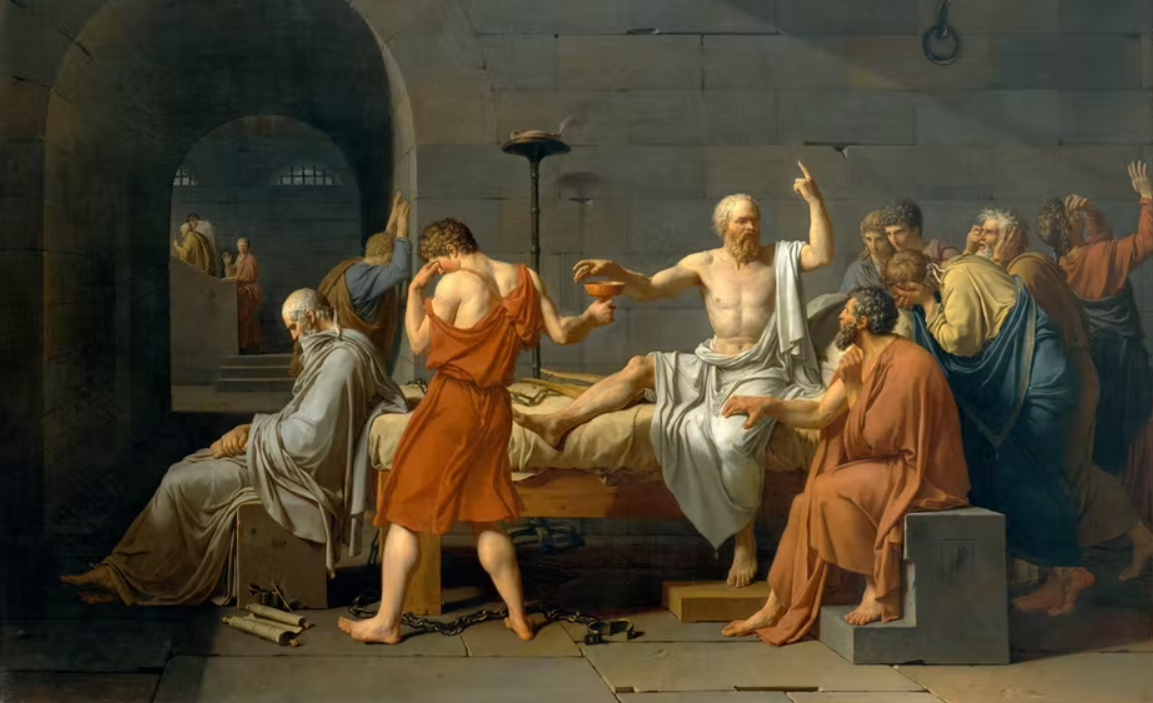
Plato’s Life and Works

Plato is one of the most important figures in Western philosophy, known for his profound contributions to epistemology, metaphysics, ethics, and politics. He was born in Athens, Greece in 427/428 BCE, and lived during a period of great political turmoil and cultural change. Plato’s life and works are widely studied and debated by scholars and students of philosophy, and his ideas continue to influence contemporary thought.

Plato’s Life: A Brief Sketch

Early Life and Education

Plato was born into a wealthy and politically influential family in Athens, Greece. His father, Ariston, was descended from the kings of Athens, and his mother, Perictione, was related to the famous lawmaker Solon. Plato’s parents died when he was young, and he was raised by his uncle, a prominent politician named Critias, who was associated with the oligarchic regime that briefly took control of Athens after the Peloponnesian War.

Plato received a traditional education in Athens, studying with some of the most prominent philosophers of his time, including Cratylus, who was known for his interest in language and naming, and Heraclitus, who emphasized the constant flux and change of the world. Plato was also influenced by the teachings of Socrates, who was known for his dialectical method of questioning and his emphasis on virtue and ethics.

Plato’s travels

Plato traveled extensively throughout the Mediterranean world, studying with other philosophers and observing different cultures and ways of life. He spent several years in Egypt, where he studied mathematics, astronomy, and philosophy. He also traveled to Italy, Sicily, and the Greek colonies in southern Italy and western Turkey. During his travels, Plato encountered a wide range of philosophical and religious traditions, which helped to shape his own philosophical views.

The Academy

In 387 BCE, Plato founded the Academy in Athens, which became one of the most important centers of learning in the ancient world. The Academy was a school for advanced study in philosophy, mathematics, and science, and it attracted students from all over Greece and beyond. Plato himself taught at the Academy, and his lectures and writings covered a wide range of topics, including metaphysics, ethics, politics, and epistemology.

Plato’s Philosophical Works

Plato’s philosophical works are among the most influential and enduring works in the Western canon. His dialogues, which take the form of conversations between Socrates and other Athenians, are masterpieces of philosophical inquiry and literary artistry. Some of his most famous works include:

The Republic

The Republic is perhaps Plato’s most famous and influential work. The Republic is a dialogue between Socrates and several other Athenians, in which they explore the nature of justice, the ideal form of government, and the nature of the human soul. The Republic is divided into ten books, and each book covers a different topic or aspect of the larger argument.

One of the central themes of The Republic is the idea of justice. Plato argues that justice is an objective and universal value that is independent of individual opinions and preferences. According to Plato, justice is the harmony and balance of the various parts of the soul, and it is necessary for the well-being of both the individual and the society.

Another important theme of The Republic is the idea of the ideal state. Plato argues that the ideal state should be ruled by philosopher-kings who possess knowledge of the good and are guided by a commitment to justice. Plato’s ideal state is designed to promote the well-being and happiness of all its citizens, and it is based on the principle of the division of labor, in which each individual performs the task for which he or she is best suited.

The Republic is also famous for its use of the allegory of the cave, which is a powerful metaphor for the nature of knowledge and truth. In the allegory, Plato describes a group of people who are chained in a dark cave and can only see the shadows of the outside world. The allegory is meant to illustrate the idea that most people are trapped in a world of ignorance and are unable to see the truth and reality of the world around them.

Phaedo

Phaedo is another important philosophical work by Plato, in which he explores the nature of the soul, the immortality of the soul, and the relationship between the body and the soul. Phaedo is a dialogue between Socrates and his friends on the day of his execution, and it is a powerful and moving exploration of the meaning of life and death.

One of the main themes of Phaedo is the idea that the soul is immortal and survives the death of the body. Plato argues that the soul is the source of life and consciousness, and that it is a separate and distinct entity from the body. According to Plato, the soul is immortal and is capable of existing independently of the body.

Another important theme of Phaedo is the relationship between the body and the soul. Plato argues that the body is a temporary and imperfect vessel for the soul, and that the ultimate goal of human life is to free the soul from the constraints of the body and achieve a state of pure knowledge and understanding.

Symposium

The Symposium is a philosophical dialogue written by Plato, in which a group of Athenians gather to celebrate the god Eros and explore the nature of love and desire. The dialogue is structured as a series of speeches, in which each character offers their own perspective on love, culminating in a final speech by Socrates.

In the dialogue, each speaker presents their own view of love, ranging from the purely physical to the spiritual and philosophical. The speeches are not only a reflection of the character’s own experiences and beliefs, but also a commentary on the different forms of love that exist in society.

One of the key themes of the Symposium is the idea that love is a powerful force that can transform and elevate the human soul. Plato argues that true love is not based on physical attraction or desire, but on a spiritual connection between two souls that allows them to transcend the limitations of the physical world.

Another important theme of the Symposium is the relationship between beauty and the divine. Plato argues that beauty is a manifestation of the eternal and unchanging Forms that exist in the realm of the divine, and that the pursuit of beauty is a way of seeking a higher truth and understanding.

The final speech in the Symposium is given by Socrates, who challenges the other speakers and offers his own view of love. Socrates argues that true love is not based on physical attraction or desire, but on a deep understanding of the other person’s character and values. Socrates also argues that the pursuit of love should be guided by reason and wisdom, rather than by mere passion or emotion.

Overall, the Symposium is a rich and complex dialogue that explores some of the most fundamental questions in philosophy, including the nature of love, beauty, and the divine. The dialogue offers a powerful critique of the superficial and physical forms of love that exist in society and challenges us to seek a deeper understanding of ourselves and our relationships.

Phaedrus

Phaedrus explores the nature of love, rhetoric, and the art of persuasion. The dialogue takes place between Socrates and Phaedrus, a young and handsome Athenian, who has just returned from a trip to the countryside.

In the dialogue, Phaedrus praises the art of rhetoric and argues that it can be used to persuade people to do good and just things. Socrates, however, is skeptical of this claim and argues that the art of rhetoric can also be used for evil purposes and can corrupt the soul.

Socrates then proceeds to offer his own view of the art of persuasion, which he believes should be based on truth and knowledge. Socrates argues that true knowledge is the only reliable foundation for persuasive argument, and that the art of persuasion should be used to lead people to the truth, rather than to deceive them.

The dialogue also explores the nature of love and the relationship between love and the art of persuasion. Phaedrus argues that love is the most powerful force in the universe and that it can inspire people to great acts of courage and virtue. Socrates, however, challenges this view and argues that true love should be based on a deep understanding of the other person’s character and values, rather than on superficial physical attraction.

Overall, Phaedrus is a rich and complex dialogue that explores some of the most fundamental questions in philosophy, including the nature of knowledge, truth, love, and the art of persuasion. The dialogue offers a powerful critique of the art of rhetoric and challenges us to consider the ethical implications of persuasive speech and action.

Timaeus

The Timaeus is a philosophical dialogue written by Plato, in which a group of Athenians gather to discuss the nature of the universe and the role of the gods in creating it. The dialogue is named after Timaeus, a Pythagorean philosopher who presents a detailed account of the creation of the universe.

In the dialogue, Timaeus presents a cosmology that is based on the idea of a divine craftsman or Demiurge who created the universe according to a rational plan. The Demiurge is seen as a benevolent god who created the universe out of a desire to share his own goodness with others.

According to Timaeus, the universe is composed of four elements – earth, air, fire, and water – which are arranged in geometric patterns according to mathematical principles. These elements are combined by the Demiurge to create the physical world, which is seen as a reflection of the divine order and harmony.

One of the key themes of the Timaeus is the idea that the universe is a living and intelligent being, rather than a collection of inert matter. Plato argues that the universe is animated by a divine soul, which gives it life and purpose. This soul is seen as the source of all movement and change in the universe, and is responsible for the cycles of creation and destruction that occur in nature.

Another important theme of the Timaeus is the idea of the human soul and its relationship to the divine. Plato argues that the human soul is composed of three parts – the rational, the spirited, and the appetitive – and that it is capable of achieving a state of harmony and balance that reflects the divine order of the universe.

Overall, the Timaeus is a rich and complex dialogue that offers a powerful vision of the universe as a rational and ordered creation of a benevolent god. The dialogue challenges us to consider the relationship between the physical world and the divine, and to seek a deeper understanding of the nature of reality.

Plato’s Theaetetus

The Theaetetus is a philosophical dialogue written by Plato, in which Socrates engages in a dialogue with Theaetetus, a young mathematician, to explore the nature of knowledge and perception.

In the dialogue, Socrates challenges Theaetetus to provide a definition of knowledge, and the two engage in a series of arguments to try to establish a clear and definitive understanding of what it means to know something. Through this process, the dialogue explores various theories of knowledge, including perception, opinion, and belief.

One of the key themes of the Theaetetus is the idea that knowledge is more than just true belief, and that it must be grounded in a deeper understanding of the world and its underlying principles. Plato argues that true knowledge requires a level of certainty and understanding that goes beyond mere opinion or belief, and that it must be based on a rigorous process of inquiry and investigation.

Another important theme of the Theaetetus is the idea of the limitations of perception and the role of reason in acquiring knowledge. Plato argues that perception alone is not sufficient to achieve true knowledge, and that it must be complemented by reason and intellect. The dialogue explores the relationship between perception and reason, and argues that true knowledge requires a synthesis of both.

Overall, the Theaetetus is a rich and complex dialogue that offers a powerful critique of the limitations of human knowledge and perception. The dialogue challenges us to consider the nature of truth and understanding, and to seek a deeper understanding of the world and ourselves. It is a testament to the enduring relevance of Plato’s philosophical ideas, and a reminder of the power of reason and inquiry in the pursuit of knowledge.

Plato’s Parmenides

The Parmenides is a philosophical dialogue written by Plato, in which Parmenides, the famous Greek philosopher, meets with a young Socrates to discuss the nature of reality and the theory of Forms.

In the dialogue, Parmenides challenges Socrates to defend his theory of Forms against a series of criticisms, and the two engage in a complex and rigorous exploration of the nature of reality and the relationship between the Forms and the physical world.

One of the key themes of the Parmenides is the idea that the world of Forms exists independently of the physical world, and that it is the source of all knowledge and understanding. Plato argues that the Forms are eternal and unchanging, and that they provide a framework for understanding the nature of reality and the relationship between the physical world and the divine.

Another important theme of the Parmenides is the idea of dialectic, or the process of inquiry and debate that is used to uncover the truth. The dialogue explores the limits of dialectic, and questions the extent to which it can be used to arrive at a definitive understanding of reality.

Overall, the Parmenides is a challenging and thought-provoking dialogue that offers a powerful critique of traditional philosophical ideas and methods. The dialogue challenges us to consider the nature of reality and the limits of human understanding, and to engage in a rigorous process of inquiry and debate in order to uncover the truth. It is a testament to the enduring relevance of Plato’s philosophical ideas, and a reminder of the power of reason and inquiry in the pursuit of knowledge.

Plato’s Meno

The Meno is a philosophical dialogue written by Plato, in which Socrates engages in a conversation with Meno, a prominent Athenian politician, about the nature of virtue and whether it can be taught.

In the dialogue, Meno challenges Socrates to define what virtue is and whether it can be taught, and the two engage in a series of arguments to explore the nature of virtue and its relationship to knowledge and wisdom.

One of the key themes of the Meno is the idea that knowledge is innate, and that it can be awakened through the process of questioning and inquiry. Plato argues that human beings possess a kind of latent knowledge that is not immediately accessible, but that can be revealed through careful questioning and examination.

Another important theme of the Meno is the relationship between virtue and knowledge. Plato argues that virtue is not simply a matter of following rules or principles, but is instead a kind of knowledge that is acquired through the process of inquiry and examination. He suggests that virtue is not something that can be taught in a conventional sense, but must instead be discovered through the process of questioning and inquiry.

Overall, the Meno is a rich and complex dialogue that offers a powerful critique of traditional views on knowledge and virtue. The dialogue challenges us to consider the nature of human understanding and the relationship between knowledge, wisdom, and virtue. It is a testament to the enduring relevance of Plato’s philosophical ideas, and a reminder of the power of questioning and inquiry in the pursuit of knowledge and understanding.

Plato’s Gorgias

The Gorgias is a philosophical dialogue written by Plato, in which Socrates engages in a debate with Gorgias, a well-known sophist, about the nature of rhetoric and its role in society.

In the dialogue, Socrates challenges Gorgias to defend the practice of rhetoric, arguing that it is often used to deceive and manipulate rather than to seek the truth. The two engage in a series of arguments and counter-arguments to explore the nature of rhetoric and its relationship to knowledge and morality.

One of the key themes of the Gorgias is the idea that knowledge and morality are intimately linked, and that the pursuit of knowledge should be guided by a commitment to ethical values. Plato argues that the pursuit of knowledge should not be driven by a desire for personal gain or power, but should instead be guided by a commitment to the common good and the pursuit of truth.

Another important theme of the Gorgias is the relationship between rhetoric and justice. Plato argues that rhetoric can be used to promote justice and the common good, but that it must be guided by ethical principles and a commitment to truth. He suggests that rhetoric should not be used to manipulate or deceive, but should instead be used to educate and enlighten.

Overall, the Gorgias is a challenging and thought-provoking dialogue that offers a powerful critique of traditional views on rhetoric and its role in society. The dialogue challenges us to consider the nature of knowledge and morality, and the relationship between rhetoric and justice. It is a testament to the enduring relevance of Plato’s philosophical ideas, and a reminder of the importance of ethical principles in the pursuit of truth and the common good.

Plato’s Cratylus

The Cratylus is a philosophical dialogue written by Plato, in which Socrates engages in a conversation with Cratylus, a student of the philosopher Heraclitus, about the nature of language and its relationship to reality.

In the dialogue, Socrates challenges Cratylus to defend his view that language is an accurate reflection of reality, arguing that language is often imprecise and subject to change. The two engage in a series of arguments and counter-arguments to explore the nature of language and its relationship to truth and knowledge.

One of the key themes of the Cratylus is the idea that language is not a fixed and objective representation of reality, but is instead subject to interpretation and change. Plato argues that language is not simply a matter of naming things, but is instead a complex and dynamic system that reflects our changing understanding of the world.

Another important theme of the Cratylus is the relationship between language and knowledge. Plato suggests that language is not simply a tool for conveying information, but is instead a means of expressing our ideas and understanding of the world. He argues that language is intimately connected to our ability to reason and think, and that our understanding of the world is shaped by the language we use to describe it.

Overall, the Cratylus is a fascinating exploration of the nature of language and its relationship to reality and knowledge. The dialogue challenges us to think deeply about the power and limitations of language, and to consider the ways in which our understanding of the world is shaped by the words we use to describe it. It is a testament to the enduring relevance of Plato’s philosophical ideas, and a reminder of the complexity and richness of human communication.

Plato on Myth

Plato, the ancient Greek philosopher, was well-known for his use of myths in his philosophical dialogues. He used these myths to illustrate complex philosophical concepts and to convey important moral and ethical teachings. In this essay, we will explore Plato’s concept of myth and its significance in his philosophical thought.

Plato’s Use of Myth

Plato used myths throughout his philosophical works to illustrate his ideas and to help his readers better understand complex philosophical concepts. These myths are often allegorical, with characters and events that represent abstract ideas and principles.

One of the most famous myths used by Plato is the myth of the cave in his work “The Republic.” In this myth, Plato uses the image of prisoners chained in a cave to represent the limited perspective of those who are not enlightened. The prisoners are only able to see shadows on the wall, and they mistake these shadows for reality. The myth of the cave is a powerful allegory for the importance of enlightenment and the pursuit of knowledge.

Another famous myth used by Plato is the myth of the charioteer in his work “Phaedrus.” In this myth, Plato uses the image of a charioteer driving two horses to represent the human soul. The charioteer represents reason, while the two horses represent the passions and appetites. The myth of the charioteer is a powerful allegory for the importance of balancing reason and passion in the pursuit of a virtuous life.

The Significance of Myth in Plato’s Thought

For Plato, myths were not simply entertaining stories, but powerful tools for conveying philosophical ideas and moral teachings. He believed that myths could be used to teach important moral and ethical lessons and to help individuals understand complex philosophical concepts.

Plato also believed that myths had a deeper meaning that could only be understood by those who had achieved a certain level of enlightenment. He believed that the myths contained hidden truths that could only be revealed to those who were able to see beyond the surface of the story.

Plato’s concept of myth was closely linked to his theory of Forms. According to Plato, the Forms were the eternal and immutable essences of things that exist beyond the physical world. He believed that myths could be used to help individuals understand the nature of the Forms and the relationship between the physical world and the world of the Forms.

Plato’s use of myths was also closely tied to his belief in the importance of education. He believed that education was essential for the development of the soul and that myths could be used to teach important moral and ethical lessons to young people.

Criticism of Plato’s Use of Myth

Plato’s use of myths has been the subject of much debate among scholars of philosophy. Some have criticized his use of myths as being too simplistic and overly didactic. Others have argued that his use of myths is too allegorical and that it can be difficult to understand the deeper meaning of the stories.

Critics of Plato’s use of myth have also pointed out that his reliance on myths can lead to a certain level of dogmatism. Because myths are often used to illustrate complex philosophical concepts, they can be used to reinforce certain beliefs and ideas without allowing for critical examination or debate.

Conclusion

Plato’s use of myth is an important part of his philosophical thought. He believed that myths could be used to convey important moral and ethical teachings and to help individuals understand complex philosophical concepts. For Plato, myths were not simply entertaining stories, but powerful tools for conveying deep philosophical ideas. Although his use of myths has been criticized, it remains an important aspect of his philosophical legacy.

Plato’s Phaedrus

Phaedrus is a philosophical dialogue written by Plato, in which the main topic of discussion is love and rhetoric. The dialogue is set in a natural setting, where Phaedrus and Socrates have a conversation about love, beauty, and the art of persuasion.

The dialogue begins with Phaedrus giving a speech on love, which he considers to be the oldest and greatest of all the gods. He argues that love can inspire individuals to achieve great deeds and that it can transform people and society. Phaedrus also praises the beauty of his lover, who he claims has inspired him to write a beautiful speech.

Socrates then responds to Phaedrus’ speech by questioning the nature of love and its relationship to rhetoric. He argues that love is not the oldest and greatest of all the gods, but rather it is a form of madness that can lead people to act in irrational ways. Socrates also criticizes Phaedrus’ speech for being overly flowery and lacking in substance.

The dialogue then turns to a discussion of the art of rhetoric, which Socrates argues is a form of flattery rather than a true art. He claims that rhetoric can be used to manipulate people and that it is not a reliable method for discovering truth. Socrates also suggests that true knowledge can only be gained through reason and logic, rather than through persuasive language.

Phaedrus then proposes a speech by the famous orator Lysias, which argues against the idea of love. Socrates criticizes the speech for being overly simplistic and for failing to consider the complexity of human nature. He then proposes his own speech, which presents a complex and nuanced view of love.

In his speech, Socrates argues that love is a divine force that can inspire individuals to seek wisdom and truth. He claims that love is a form of divine madness that can lead individuals to transcend the limitations of their ordinary selves and to seek the divine. Socrates also argues that love is not limited to physical attraction, but rather it can be directed towards any form of beauty, including the beauty of ideas and knowledge.

The dialogue concludes with a discussion of the importance of self-knowledge in the pursuit of love and wisdom. Socrates argues that true wisdom can only be gained through self-knowledge and that the pursuit of knowledge and truth requires humility and an openness to criticism.

The Phaedrus is a complex and multifaceted dialogue that explores a wide range of philosophical themes, including love, beauty, rhetoric, and the nature of truth. Plato uses the dialogue to present a complex and nuanced view of love, one that emphasizes its transformative power and its potential to lead individuals to seek wisdom and truth.

The dialogue also presents a critique of the art of rhetoric, which Socrates argues is often used to manipulate people rather than to discover truth. Plato’s critique of rhetoric reflects his broader concerns about the relationship between language and truth, which he explores in many of his other dialogues.

Overall, the Phaedrus is a rich and fascinating dialogue that continues to be studied and debated by philosophers and scholars today. It presents a complex and nuanced view of love, rhetoric, and the pursuit of truth, and it offers a vision of human flourishing that emphasizes the importance of self-knowledge and the pursuit of wisdom.

Plato’s Symposium

The Symposium is a philosophical dialogue by Plato, in which a group of Athenians gather at a dinner party to celebrate the victory of the playwright Agathon. The guests include Socrates, Aristophanes, Phaedrus, and Pausanias, among others. The main theme of the dialogue is the nature of love, with each guest giving a speech in praise of love.

The first speech is given by Phaedrus, who argues that love is the greatest of all gods and that it is responsible for inspiring great works of art and poetry. He argues that love can inspire individuals to achieve greatness and that it has the power to transform individuals and society.

Pausanias, the second speaker, offers a more nuanced view of love. He argues that there are two types of love: a vulgar love that is motivated by physical desire and a noble love that is based on the soul. He argues that the noble love is superior to the vulgar love because it is based on a deeper understanding of the nature of love.

Aristophanes, the comic playwright, offers a mythic explanation for the nature of love. He argues that human beings were once spherical creatures that were split in two by the gods. According to Aristophanes, love is the desire to be reunited with one’s other half. He argues that love is the pursuit of wholeness and completeness.

The most famous speech in the Symposium is given by Socrates, who is portrayed as the wisest and most insightful of all the guests. Socrates argues that love is the desire for beauty and that it has the power to transform individuals and society. He argues that the highest form of love is the love of wisdom and that the pursuit of knowledge and truth is the ultimate goal of human existence.

Alcibiades, the final speaker, offers a different perspective on love. He recounts his own love affair with Socrates and argues that Socrates embodies the highest form of love. Alcibiades describes Socrates as a “mystic” and argues that he is the only one who truly understands the nature of love.

The Symposium is a complex and nuanced exploration of the nature of love. Plato uses the speeches of the various guests to present different perspectives on love and to explore the many different ways in which love can be understood. At the heart of the dialogue is the idea that love has the power to transform individuals and society, and that the pursuit of knowledge and truth is the ultimate goal of human existence.

The dialogue also contains several important themes that run throughout Plato’s philosophy. For example, Plato emphasizes the importance of reason and logic in the pursuit of truth. He argues that the highest form of love is the love of wisdom, and that the pursuit of knowledge is essential to human flourishing.

In addition, the dialogue explores the relationship between the individual and society. Plato argues that the pursuit of knowledge and truth is not only important for individual flourishing, but also for the flourishing of society as a whole. He presents a vision of an ideal society in which individuals are governed by reason and virtue, and in which love is directed towards the common good.

Overall, the Symposium is one of Plato’s most influential works and has had a lasting impact on Western philosophy. The dialogue presents a complex and nuanced view of love, and it emphasizes the importance of reason, virtue, and the pursuit of knowledge in human life. The Symposium remains a fascinating exploration of the nature of love and continues to be read and studied by scholars and students alike.

Plato’s Erotic Dialogues

Plato’s erotic dialogues are a group of works in which Plato explores the nature of love, desire, and sexuality. These dialogues include the Symposium, the Phaedrus, and the Republic. In these works, Plato presents a complex and nuanced view of love and desire, and he argues that love has the power to transform individuals and society. In this essay, I will provide an overview of the major themes and arguments of Plato’s erotic dialogues.

The Symposium is perhaps the most famous of Plato’s erotic dialogues. The dialogue takes place at a dinner party, where a group of Athenians gather to celebrate the victory of the playwright Agathon. Each guest gives a speech in praise of love, and these speeches form the heart of the dialogue. The speeches range from the comic to the profound, and they explore the nature of love in all its aspects.

The first speech is given by Phaedrus, who argues that love is the greatest of all gods, and that it is responsible for inspiring great works of art and poetry. Pausanias, the second speaker, argues that there are two types of love: a vulgar love that is motivated by physical desire, and a noble love that is based on the soul. Aristophanes, the comic playwright, offers a mythic explanation for the nature of love, arguing that human beings were once spherical creatures that were split in two by the gods. According to Aristophanes, love is the desire to be reunited with one’s other half.

The most famous speech in the Symposium is given by Socrates, who is portrayed as the wisest and most insightful of all the guests. Socrates argues that love is the desire for beauty, and that it has the power to transform individuals and society. Socrates argues that the highest form of love is the love of wisdom, and that the pursuit of knowledge and truth is the ultimate goal of human existence.

The Phaedrus is another important erotic dialogue in which Plato explores the nature of love and desire. In this dialogue, Socrates and Phaedrus discuss the nature of rhetoric, and they consider the power of words to influence the soul. They also discuss the nature of love, and they argue that love has the power to inspire individuals to achieve greatness. The dialogue concludes with a mythic explanation for the nature of love, in which the soul is depicted as a chariot pulled by two horses, one noble and one base.

The Republic is a much longer and more complex work than the Symposium or the Phaedrus, but it also explores the nature of love and desire in great detail. In the Republic, Plato presents a vision of the ideal society, in which individuals are governed by reason and virtue. Plato argues that love has the power to transform individuals and society, and he depicts the ideal society as one in which love is directed towards the common good.

One of the most interesting aspects of the Republic is Plato’s discussion of the nature of desire. Plato argues that desire is a fundamental human trait, and that it is the source of all human action. However, Plato also argues that desire can be either rational or irrational, depending on whether it is directed towards the good or towards the bad. Plato argues that the highest form of desire is the desire for knowledge and truth, and that the pursuit of wisdom is the ultimate goal of human existence.

In conclusion, Plato’s erotic dialogues are some of the most important and influential works in the history of Western philosophy. In these dialogues, Plato presents a complex and nuanced view of love and desire, and he argues that love has the power to transform individuals and society. Plato’s dialogues remind us of the importance of reason and virtue in human life, and they emphasize the importance of the pursuit of knowledge and truth.

Plato’s Timaeus

Plato’s Timaeus is a philosophical dialogue that presents a cosmological theory of the universe. In this dialogue, Plato presents a creation myth that explains the origin and structure of the universe, and the nature of human beings. The Timaeus is one of the most influential works in the history of philosophy, and has had a significant impact on the development of Western thought. In this essay, I will provide an overview of the major themes and arguments of the Timaeus.

The dialogue begins with a conversation between Socrates, Timaeus, and Critias. Socrates asks Timaeus to explain his views on the nature of the universe and how it came into being. Timaeus agrees to provide an account of the universe, but he emphasizes that his account is only a probable story, and not necessarily the truth.

Timaeus begins his account by explaining that the universe was created by a divine craftsman, the Demiurge. The Demiurge is a divine being who creates the world according to a plan or design, and he is responsible for the order and harmony of the universe. Timaeus explains that the universe is composed of four elements: earth, air, fire, and water, which are combined in different proportions to form the various substances in the world. These elements are created by the Demiurge, who shapes them into the forms that we see in the world.

Timaeus also explains that the universe is a living being, and that it has a soul. The soul of the universe is made up of three parts: the rational soul, the spirited soul, and the appetitive soul. These parts correspond to the three parts of the human soul, and they are responsible for the order and harmony of the universe.

Timaeus goes on to explain the nature of human beings. He argues that human beings are created by the Demiurge, and that they are composed of the same four elements as the rest of the universe. However, human beings are unique because they have a rational soul, which sets them apart from the rest of the living beings in the universe. The rational soul is responsible for the intellectual and moral qualities of human beings, and it is immortal.

Timaeus also explains that the universe is governed by natural laws, and that these laws are created by the Demiurge. These laws ensure that the universe operates in an orderly and harmonious way, and they are responsible for the regularity and predictability of the universe.

In conclusion, Plato’s Timaeus is a fascinating dialogue that presents a cosmological theory of the universe. Timaeus explains that the universe was created by a divine craftsman, the Demiurge, who is responsible for the order and harmony of the universe. He also explains that human beings are created by the Demiurge, and that they are unique because they have a rational soul, which sets them apart from the rest of the living beings in the universe. The Timaeus reminds us of the importance of order and harmony in the universe, and it underscores the importance of the natural laws that govern the world. The Timaeus is a profound work that has had a significant impact on the development of Western thought, and it continues to be studied and debated by philosophers and scholars today.

Plato’s Cratylus

Plato’s Cratylus is a dialogue in which Socrates engages in a philosophical conversation with two of his friends, Hermogenes and Cratylus, about the nature of language and its relationship to reality. The dialogue raises fundamental questions about the possibility of knowledge and the role that language plays in our understanding of the world. In this essay, I will provide an overview of the major themes and arguments of the Cratylus.

The dialogue begins with Hermogenes and Cratylus discussing the origin of names and the extent to which they are arbitrary or natural. Hermogenes argues that names are arbitrary and that they are created by convention, while Cratylus argues that names are natural and that they reflect the true nature of things. Socrates joins the conversation and suggests that they should examine the question more closely.

Socrates proceeds to question Hermogenes and Cratylus about the meaning of various names, such as the name “Hermes,” which refers to the god of commerce and communication. Socrates asks whether the name accurately reflects the true nature of the god, or whether it is merely a convention. He suggests that if the name is arbitrary, then it is possible to give things any name we choose, and there is no necessary connection between words and the objects they represent.

Cratylus, on the other hand, argues that names are not arbitrary but are instead natural and reflect the essence of things. He believes that the true names of things are those that accurately describe their nature and that they are known intuitively rather than through convention or learning. Cratylus argues that the study of language should be focused on discovering these natural names rather than inventing new ones.

Socrates challenges both Hermogenes and Cratylus on their positions, arguing that the truth about language and reality is more complex than either of them have suggested. He suggests that names may be both natural and conventional, and that the relationship between words and objects is not simple or straightforward. He also questions whether it is possible to have knowledge of anything, including language and reality, and whether language can accurately reflect the true nature of things.

The dialogue ends with Socrates admitting that he does not have a clear answer to the questions that have been raised. He suggests that the study of language and reality requires a great deal of patience, persistence, and humility, and that we may never arrive at a complete understanding of the truth.

In conclusion, Plato’s Cratylus is a fascinating dialogue that explores some of the most fundamental questions about language, reality, and knowledge. It raises important questions about the nature of names, the relationship between words and objects, and the possibility of true knowledge. Socrates challenges the positions of Hermogenes and Cratylus and suggests that the truth is more complex than either of them have suggested. The Cratylus reminds us that the pursuit of truth requires patience, persistence, and humility, and that we should always be willing to question our own assumptions and beliefs.

Plato’s Parmenides

Plato’s Parmenides is a dialogue in which Socrates engages in a philosophical conversation with the renowned philosopher Parmenides. In this dialogue, Socrates attempts to understand the nature of reality, the relationship between ideas and the material world, and the nature of being. In this essay, I will provide an overview of the major themes and arguments of the Parmenides.

The dialogue begins with Socrates traveling to Athens to meet Parmenides and his student Zeno. Socrates expresses his admiration for Parmenides’ work, and Parmenides encourages Socrates to engage in philosophical inquiry. Socrates then presents his own theory of Forms, which holds that there is a separate, eternal, and unchanging world of Forms or Ideas, which are the true objects of knowledge, and that the material world is a mere reflection or copy of this world.

Parmenides challenges Socrates’ theory by asking him to explain how the Forms are related to the material world. Parmenides argues that if the Forms are separate from the material world, then they cannot have any impact on the material world, and they cannot be known. Socrates attempts to answer this challenge by suggesting that the Forms are the causes of things in the material world, and that they are known through reason.

Parmenides then presents his own theory of being, which holds that being is a single, indivisible, and eternal substance. He argues that being cannot be created or destroyed, and that it is not composed of parts. Parmenides suggests that all things that exist are merely modifications or aspects of being, and that they do not have any independent existence.

Socrates is initially intrigued by Parmenides’ theory of being, but he becomes confused when Parmenides begins to apply his theory to the Forms. Parmenides suggests that if the Forms are real, then they must exist in the same way that being exists, as a single, indivisible substance. Socrates struggles to reconcile his theory of Forms with Parmenides’ theory of being, and he begins to question whether his theory is correct.

The dialogue then takes a dramatic turn, as Parmenides and his student Zeno challenge Socrates to defend his theory of Forms. They present a series of arguments that suggest that the theory of Forms is logically flawed, and that it leads to absurd conclusions. Socrates struggles to respond to these challenges, and he begins to doubt his own theory.

In the final section of the dialogue, Parmenides offers Socrates some advice on how to pursue philosophical inquiry. He suggests that Socrates should not be discouraged by the challenges he has faced, and that he should continue to seek the truth with an open mind. Parmenides also suggests that philosophical inquiry is a lifelong pursuit, and that it requires patience, humility, and perseverance.

In conclusion, Plato’s Parmenides is a complex and challenging dialogue that explores some of the most fundamental questions of philosophy. It presents a powerful challenge to Socrates’ theory of Forms, and it raises important questions about the nature of reality, the relationship between ideas and the material world, and the nature of being. The Parmenides is a testament to the power of philosophical inquiry, and it reminds us that the pursuit of truth requires both courage and humility.

Plato’s Republic: Key Concepts

Plato’s Republic is one of the most famous and influential works of Western philosophy. Written in the form of a dialogue between Socrates and several other Athenians, the Republic is a comprehensive exploration of the nature of justice, the ideal society, and the role of the philosopher in society. In this essay, I will provide an overview of the major themes and arguments of the Republic.

The dialogue begins with Socrates and his friend Glaucon discussing the nature of justice. Socrates suggests that justice is not simply a matter of obeying laws, but rather a matter of having a well-ordered soul. He argues that the just person has three parts to their soul: the rational part, the spirited part, and the appetitive part. The rational part is responsible for making decisions based on reason, the spirited part is responsible for defending the decisions of the rational part, and the appetitive part is responsible for desires and pleasures.

Socrates then proposes that the ideal city, which he calls Kallipolis, is also based on the principle of justice as a well-ordered whole. In the ideal city, the rulers are the philosopher-kings, who are selected based on their knowledge and virtue. The philosopher-kings are responsible for ensuring that the city is just, and they do so by ruling according to reason rather than self-interest.

In order to create the ideal city, Socrates proposes a series of reforms. The first reform is to abolish the family unit and replace it with a communal system of child-rearing. This is done in order to eliminate the possibility of nepotism and to ensure that children are raised in the most beneficial way possible. The second reform is to abolish private property and to replace it with a communal system of distribution. This is done in order to eliminate the possibility of greed and to ensure that everyone has access to the resources they need.

Socrates then proposes a series of three classes in the ideal city: the ruling class, the auxiliary class, and the producing class. The ruling class is made up of the philosopher-kings, who are responsible for ruling the city according to reason. The auxiliary class is made up of the warriors, who are responsible for defending the city and upholding the decisions of the philosopher-kings. The producing class is made up of the rest of the citizens, who are responsible for producing goods and services for the city.

Socrates then turns to the question of the education of the philosopher-kings. He argues that the education of the philosopher-kings must be rigorous and thorough, and that it must include a study of mathematics, astronomy, music, and philosophy. He suggests that the philosopher-kings must also be trained in the art of dialectic, which is the method of questioning and debate used by Socrates.

The dialogue then turns to a discussion of the Forms. Socrates argues that the Forms are eternal, unchanging, and perfect, and that they exist independently of the material world. He suggests that the Forms are the source of all knowledge, and that they are necessary for understanding the world. He also argues that the philosopher-kings must have knowledge of the Forms in order to rule justly.

Finally, Socrates concludes the dialogue by discussing the nature of the afterlife. He suggests that the just person will be rewarded in the afterlife, while the unjust person will be punished. He argues that the soul is immortal and that it survives the death of the body. He suggests that the philosopher must strive to live a just life in order to achieve the highest reward in the afterlife.

Plato’s Phaedo

Plato’s Phaedo is a dialogue that takes place on the day of Socrates’ execution. In this dialogue, Socrates engages in a discussion with his friends about the nature of the soul, the afterlife, and the existence of the Forms. The Phaedo is one of Plato’s most famous and influential dialogues, and it has been studied and interpreted in a variety of ways.

The dialogue begins with Socrates discussing the nature of death with his friends. He argues that death is the separation of the soul from the body, and that the soul is immortal and survives the death of the body. He suggests that the philosopher should not fear death, as it offers the opportunity to separate the soul from the body and to attain true knowledge of the Forms.

The discussion then turns to the nature of the soul. Socrates argues that the soul is simple, indestructible, and immortal. He suggests that the soul is like the Forms, and that it exists independently of the body. He also argues that the soul is the source of life, motion, and sensation.

Socrates then presents several arguments for the immortality of the soul. He suggests that the soul must be immortal because it is the source of life, and that it must exist before and after the body. He also argues that the soul is like the Forms, and that it cannot be destroyed or changed. Finally, he suggests that the soul is like a pilot, and that it is responsible for guiding the body through life.

The dialogue then turns to a discussion of the Forms. Socrates argues that the Forms are eternal, unchanging, and perfect, and that they exist independently of the material world. He suggests that the Forms are the source of all knowledge, and that they are necessary for understanding the world.

Socrates then presents an argument for the existence of the Forms based on the nature of opposites. He argues that everything that exists has an opposite, and that the opposite of a thing is not the thing itself, but another thing altogether. He suggests that the Forms are the source of the opposites, and that they are necessary for the existence of the material world.

The dialogue concludes with Socrates’ execution. His friends mourn his death, but he encourages them to think of death as a release from the body and a journey to the afterlife. He suggests that the philosopher should not fear death, but should welcome it as an opportunity to attain true knowledge of the Forms.

The Phaedo is significant for several reasons. First, it presents a powerful argument for the immortality of the soul and the existence of the Forms. These ideas have had a profound impact on Western philosophy, and they continue to be studied and debated today.

Second, the dialogue presents a powerful defense of philosophy and the life of the philosopher. Socrates suggests that the philosopher should not fear death, but should welcome it as an opportunity to attain true knowledge of the Forms. This idea has influenced generations of philosophers, and it continues to be an important theme in contemporary discussions of philosophy.

Finally, the dialogue raises important questions about the nature of reality and the relationship between the material world and the world of the Forms. Socrates suggests that the material world is a shadow or copy of the world of the Forms, and that true knowledge can only be attained by understanding the Forms. This idea has had a profound impact on Western philosophy, and it continues to be studied and debated today.

In conclusion, Plato’s Phaedo is a powerful and influential dialogue that raises important questions about the nature of the soul, the afterlife, and the existence of the Forms. It presents a powerful defense of philosophy and the life of the philosopher, and it has had a profound impact on Western philosophy.