Plutarch was a prominent philosopher, biographer, and essayist who lived during the first and second centuries AD in ancient Greece. He is best known for his Parallel Lives, a series of biographies of famous Greeks and Romans, and his Moralia, a collection of ethical and philosophical essays. Plutarch’s moral philosophy is grounded in his belief in the unity of all things, the importance of virtue, and the pursuit of excellence. This essay will examine Plutarch’s moral philosophy in more detail.
Plutarch believed that the universe was a unified whole and that everything in it was interconnected. He believed that there was a divine force or intelligence that governed the universe, and that humans had a duty to live in harmony with this force. Plutarch’s belief in the unity of all things is reflected in his statement, “All things are bound together, and the bond is sacred; and scarcely one thing is foreign to another, for they have been arranged together in their places and together make the same ordered Universe.”
Plutarch believed that the purpose of human life was to achieve excellence, which he called arete. Arete was not just a matter of external success, such as wealth or fame, but also involved the cultivation of virtue. Plutarch believed that virtue was the foundation of excellence and that it was necessary for individuals to cultivate virtues such as courage, justice, wisdom, and self-control in order to achieve arete.
Plutarch believed that virtue was not innate, but was something that could be acquired through education and practice. He believed that education was crucial in the cultivation of virtue, and that individuals should be taught to think critically, to be self-aware, and to recognize their own strengths and weaknesses. Plutarch believed that individuals should be taught to value the pursuit of excellence over external success, and that they should strive to be good rather than simply to do good.
Plutarch believed that the pursuit of excellence required a balance between the intellectual and the moral aspects of life. He believed that individuals should cultivate their intellects through the study of philosophy, literature, and the arts, but that they should also cultivate their moral character through the practice of virtue. Plutarch believed that the cultivation of both the intellectual and the moral aspects of life was necessary for individuals to achieve arete.
Plutarch believed that individuals should strive to live in accordance with nature, which he saw as a manifestation of the divine intelligence that governed the universe. He believed that individuals should live in harmony with the natural world and that they should respect and protect the environment. Plutarch also believed that individuals should live in accordance with their own nature, recognizing their own strengths and weaknesses and striving to develop their talents and abilities to their fullest potential.
Plutarch believed that individuals should strive to live a life of moderation, avoiding excess and indulgence. He believed that individuals should practice self-control and that they should avoid the pursuit of pleasure for its own sake. Plutarch believed that the pursuit of pleasure was not inherently bad, but that it should be pursued in a balanced and moderate way, and that it should be subordinated to the pursuit of excellence and virtue.
Plutarch believed that individuals should strive to be good citizens, contributing to the welfare of their communities and working to promote social justice. He believed that individuals had a duty to help others and to promote the common good, and that they should strive to live in a just and equitable society. Plutarch believed that individuals should be active in politics and should work to promote social reform and progress.
In conclusion, Plutarch’s moral philosophy emphasizes the importance of living a virtuous life in pursuit of excellence. He believed that the universe was a unified whole and that individuals had a duty to live in harmony with it. Plutarch believed that the pursuit of excellence required a balance between the intellectual and the moral aspects of life, and that individuals should strive to cultivate both in order to achieve arete. He also emphasized the importance of living in accordance with nature, practicing self-control, and contributing to the welfare of one’s community. Plutarch’s philosophy remains relevant today as it encourages individuals to cultivate their virtues and work towards a better society. Overall, Plutarch’s moral philosophy provides a guide for living a fulfilling and purposeful life, and serves as a reminder of the importance of virtue and excellence in human endeavors.
Looking for affordable accommodations at Panglao Island, Bohol? Experience the charm of Residence 3 at Belle’s Residences. This inviting space offers a perfect mix of comfort and convenience, located just minutes from Panglao’s pristine beaches.
Socrates was a philosopher who lived in Athens, Greece, during the 5th century BCE. He was born in 469 BCE to a stonemason father and a midwife mother. Despite his humble origins, Socrates was known for his exceptional intelligence and his ability to engage in deep philosophical discussions with people from all walks of life.
Socrates spent much of his life wandering the streets of Athens, engaging in conversations with anyone who was willing to talk to him. He did not hold any official position in the city, but he was well-respected by many Athenians for his wisdom and his commitment to seeking the truth.
Socrates never wrote anything down himself, so most of what we know about him comes from the writings of his students, most notably Plato. According to these writings, Socrates was known for his method of questioning, which involved asking a series of questions in order to uncover the underlying assumptions and contradictions in a person’s beliefs.
Socrates’s method of questioning often led to uncomfortable revelations for his interlocutors, who would realize that they did not actually know as much as they thought they did. This process of questioning and self-reflection was an essential part of Socrates’s philosophy, and he believed that it was the only way to arrive at the truth.
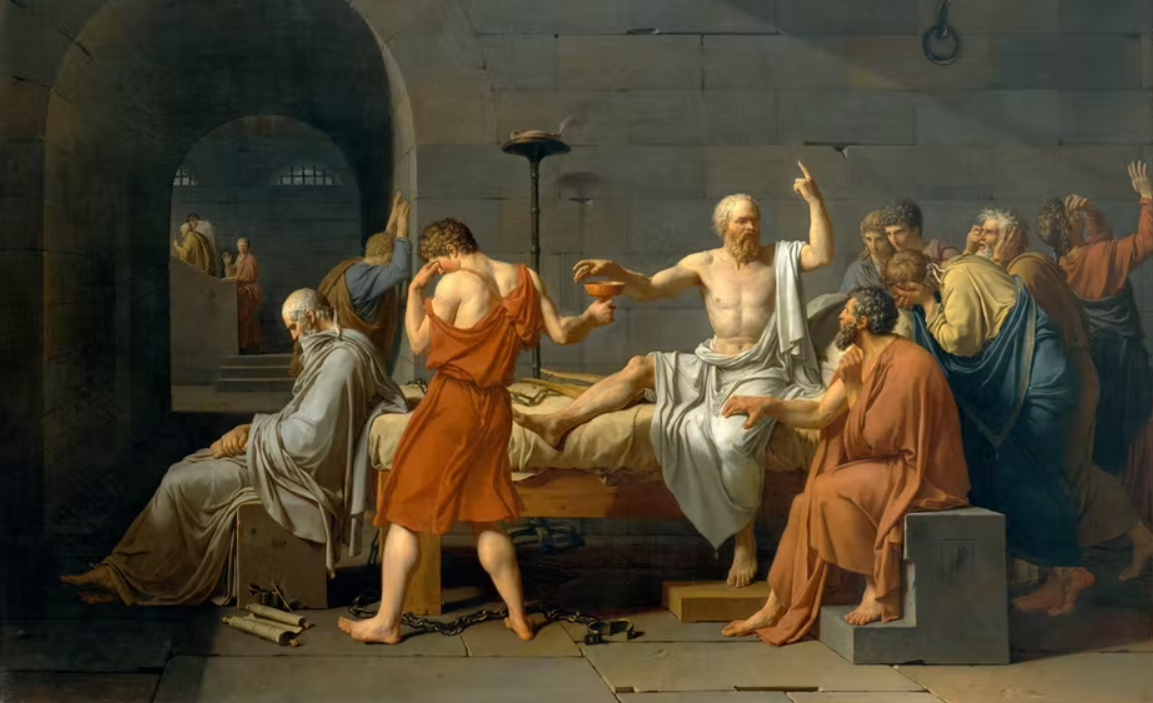
Socrates was not always popular with the people of Athens, however. His questioning often challenged the conventional wisdom of the city, and he was accused of corrupting the youth and disrespecting the gods. In 399 BCE, he was brought to trial on charges of impiety and sentenced to death by drinking hemlock.
Socrates’s death has become one of the most famous moments in the history of philosophy. According to Plato’s account, Socrates accepted his fate with calm resignation, and he used his final moments to deliver a powerful speech about the importance of living a virtuous life. He argued that true happiness could only be achieved by living a life of wisdom, courage, justice, and self-control, and that these virtues were more important than wealth, power, or fame.
Socrates’s death did not mark the end of his legacy, however. His ideas and teachings continued to be passed down through the works of his students, most notably Plato. Socrates’s method of questioning and his emphasis on the pursuit of truth and knowledge have had a profound influence on the development of Western philosophy, and his legacy continues to be felt today.
In addition to his philosophical contributions, Socrates was also known for his personal character. He was famously humble and never claimed to be a great teacher or a wise man. Instead, he recognized his own ignorance and used his questioning to help others recognize their own limitations as well.
Socrates was also known for his loyalty and his commitment to his principles. Despite the fact that he was sentenced to death, he refused to compromise his beliefs or to accept a lighter punishment. His commitment to truth and justice inspired generations of philosophers and thinkers, and his legacy continues to inspire people today.
Socrates’s Idea of Truth and Knowledge
Socrates’s ideas about truth and knowledge have had a profound influence on Western thought. Socrates believed that knowledge was the key to living a good life, and he spent much of his time engaging in discussions with people in order to uncover the truth.
One of Socrates’s most famous teachings was his statement that “I know that I am ignorant.” Socrates believed that true wisdom was recognizing one’s own ignorance, and that the pursuit of knowledge was a never-ending process of questioning and self-reflection. He believed that the only way to gain knowledge was to engage in dialogue with others, asking questions and challenging assumptions in order to arrive at a deeper understanding of the truth.
Socrates believed that there was a fundamental difference between knowledge and opinion. He believed that knowledge was objective and universal, while opinion was subjective and individual. Knowledge was something that could be discovered through dialogue and questioning, while opinion was something that was based on personal experience and perception.
Socrates’s concept of truth was closely linked to his belief in the existence of objective, universal knowledge. He believed that there was a reality that existed independently of human perception and that the pursuit of knowledge was a way to access that reality. He believed that truth was not subjective, but rather an objective reality that could be discovered through questioning and dialogue.
Socrates also believed that knowledge was not something that could be obtained through the senses or through observation of the physical world. Instead, he believed that true knowledge was something that existed in the realm of the intellect, and that it could only be accessed through reasoning and contemplation.
In conclusion, Socrates’s idea of truth and knowledge was based on his belief that knowledge was the key to living a good life. He believed that true wisdom was recognizing one’s own ignorance and that the pursuit of knowledge was a never-ending process of questioning and self-reflection. He believed that the only way to gain knowledge was through dialogue and questioning, and that knowledge was objective and universal, while opinion was subjective and individual.
Socrates’s Concept of Wisdom
Socrates believed that wisdom was the key to living a virtuous life, and that the pursuit of wisdom was an ongoing process that required constant questioning and self-reflection.
Socrates believed that wisdom was not something that could be taught, but rather something that could only be gained through personal experience and contemplation. He believed that the pursuit of wisdom was a lifelong process that required a commitment to truth and self-improvement.
According to Socrates, wisdom was not a matter of possessing a set of knowledge or skills, but rather a matter of understanding the underlying principles that governed human behavior and the universe as a whole. He believed that wisdom involved a deep understanding of the nature of reality, including the relationship between human beings and the world around them.
Socrates’s approach to wisdom was based on his belief in the importance of questioning and critical thinking. He believed that true wisdom required an openness to new ideas and a willingness to challenge one’s own assumptions and beliefs. He believed that the only way to gain wisdom was through dialogue and discussion with others, and that this process of questioning and self-reflection was essential to personal growth and development.
Socrates also believed that wisdom was closely linked to the pursuit of virtue. He believed that a wise person was someone who lived a virtuous life, and that the pursuit of wisdom was inseparable from the pursuit of moral excellence. He believed that the ultimate goal of human life was to live a virtuous life, and that wisdom was the key to achieving this goal.
In conclusion, Socrates’ concept of wisdom was based on his belief in the pursuit of knowledge and the importance of questioning and critical thinking. He believed that true wisdom was recognizing one’s own ignorance and that the pursuit of wisdom was a never-ending process of self-reflection and personal growth. He believed that wisdom involved a deep understanding of the underlying principles that governed human behavior and the universe as a whole, and that the pursuit of wisdom was inseparable from the pursuit of virtue.
Socrates’s Concept of Courage
Socrates was also known for his emphasis on the importance of virtue in human life, including the concept of courage. According to Socrates, courage was an essential component of a virtuous life, and he believed that it was a quality that could be developed through practice and self-reflection.
Socrates believed that courage was not simply a matter of physical bravery or fearlessness, but rather a moral quality that involved standing up for one’s beliefs and values, even in the face of opposition or adversity. He believed that true courage required a commitment to moral excellence and a willingness to face difficult or uncomfortable situations in order to uphold one’s principles.
Socrates’s approach to courage was based on his belief in the importance of questioning and critical thinking. He believed that true courage required an openness to new ideas and a willingness to challenge one’s own assumptions and beliefs. He believed that the only way to develop courage was through dialogue and discussion with others, and that this process of questioning and self-reflection was essential to personal growth and development.
Socrates also believed that courage was closely linked to the pursuit of wisdom and the other virtues. He believed that a courageous person was someone who lived a virtuous life, and that the pursuit of courage was inseparable from the pursuit of moral excellence. He believed that the ultimate goal of human life was to live a virtuous life, and that courage was an essential component of this goal.
Socrates’s teachings on courage were grounded in his own experiences as a philosopher and a citizen of Athens. He was known for his willingness to question authority and challenge conventional wisdom, even in the face of persecution and opposition. He believed that the pursuit of truth and wisdom required a willingness to stand up for one’s beliefs and values, even in the face of hostility or persecution.
Socrates also believed that courage required a willingness to face one’s own fears and weaknesses, and to confront the truth about oneself. He believed that true courage involved a willingness to acknowledge one’s own limitations and shortcomings, and to work to overcome them through self-improvement and personal growth.
In conclusion, Socrates’ concept of courage was grounded in his belief in the importance of virtue and the pursuit of moral excellence. He believed that courage was an essential component of a virtuous life, and that it involved standing up for one’s beliefs and values, even in the face of opposition or adversity. Socrates believed that the pursuit of courage required a commitment to questioning and critical thinking, and that it was closely linked to the pursuit of wisdom and the other virtues.
Socrates’s Concept of Justice
Socrates believed that justice was an essential component of a virtuous life and that it was closely linked to the pursuit of wisdom and the other virtues. According to Socrates, justice involved living in accordance with the principles of virtue and morality, and he believed that it was a quality that could be developed through practice and self-reflection.
Socrates’s approach to justice was based on his belief in the importance of questioning and critical thinking. He believed that true justice required an openness to new ideas and a willingness to challenge one’s own assumptions and beliefs. He believed that the only way to develop a just society was through dialogue and discussion with others, and that this process of questioning and self-reflection was essential to personal growth and development.
Socrates believed that justice required a commitment to moral excellence and a willingness to live in accordance with the principles of virtue and morality. He believed that a just person was someone who lived a virtuous life, and that the pursuit of justice was inseparable from the pursuit of moral excellence. He believed that the ultimate goal of human life was to live a virtuous life, and that justice was an essential component of this goal.
Socrates’s teachings on justice were grounded in his own experiences as a philosopher and a citizen of Athens. He was known for his willingness to question authority and challenge conventional wisdom, even in the face of persecution and opposition. He believed that the pursuit of truth and wisdom required a willingness to stand up for what was right and just, even in the face of hostility or persecution.
Socrates also believed that justice required a willingness to confront the truth about oneself and to acknowledge one’s own limitations and shortcomings. He believed that true justice involved a commitment to self-improvement and personal growth, and that it required a willingness to work to overcome one’s own flaws and weaknesses.
In Socrates’s view, justice was not simply a matter of obeying the law or conforming to social norms, but rather a moral quality that required a commitment to living in accordance with the principles of virtue and morality. He believed that a just society was one that was based on these principles and that the pursuit of justice required a commitment to questioning and critical thinking, as well as a willingness to work towards creating a more just and equitable society.
In conclusion, Socrates’s concept of justice was grounded in his belief in the importance of virtue and the pursuit of moral excellence. He believed that justice involved living in accordance with the principles of virtue and morality and that it was a quality that could be developed through practice and self-reflection. Socrates believed that the pursuit of justice required a commitment to questioning and critical thinking, and that it was closely linked to the pursuit of wisdom and the other virtues.
Socrates’s Concept of Self-control
Socrates believed that self-control was a crucial component of living a virtuous life. He saw self-control as the ability to resist impulses and desires that could lead to harm or conflict with others, and the ability to act in accordance with one’s principles and values.
Socrates believed that self-control was essential for personal growth and development, and that it was closely linked to the pursuit of wisdom and the other virtues. He believed that a person who lacked self-control was vulnerable to the influence of their emotions and desires, and could easily be led astray from the path of virtue and morality.
Socrates believed that self-control required a commitment to self-reflection and a willingness to examine one’s own thoughts and actions. He believed that self-control could be developed through practice and discipline, and that it required a willingness to face one’s own weaknesses and limitations.
Socrates also believed that self-control required a willingness to challenge one’s own assumptions and beliefs, and to be open to new ideas and perspectives. He believed that true self-control involved a willingness to confront the truth about oneself and to acknowledge one’s own flaws and shortcomings.
In Socrates’s view, self-control was not simply a matter of suppressing one’s desires or emotions, but rather a matter of cultivating a sense of inner harmony and balance. He believed that true self-control involved finding a way to balance one’s desires and impulses with one’s principles and values, and that this required a deep understanding of oneself and one’s motivations.
Socrates believed that self-control was essential for creating a just and equitable society. He believed that a society could only be just if its members had the ability to control their impulses and desires, and to act in accordance with the principles of virtue and morality. He saw self-control as a key component of personal responsibility, and believed that individuals who lacked self-control could not be trusted to act in the best interests of society as a whole.
In conclusion, Socrates’s concept of self-control was grounded in his belief in the importance of virtue and the pursuit of personal growth and development. He saw self-control as the ability to resist impulses and desires that could lead to harm or conflict with others, and the ability to act in accordance with one’s principles and values. Socrates believed that self-control could be developed through practice and discipline, and that it required a willingness to face one’s own weaknesses and limitations.
Socratic Method
Socrates’s method of questioning, also known as the Socratic method, is a style of inquiry that he developed in order to stimulate critical thinking and expose underlying assumptions. It involves asking a series of questions designed to help individuals clarify their thinking, challenge their assumptions, and arrive at a deeper understanding of a particular issue or concept.
The Socratic method typically involves a dialogue between two individuals, with one person asking questions and the other person answering them. Socrates was known for his skill in this form of conversation and used it to engage in philosophical discussions with his students, friends, and others in Athens.
At the heart of the Socratic method is the idea that knowledge and understanding come not from having answers, but from questioning assumptions and exploring new possibilities. Socrates believed that the role of the philosopher was not to provide answers, but to stimulate thought and inquiry, and to help individuals arrive at their own understanding of the world.
In practice, the Socratic method involves a number of different techniques and approaches, including:
1. Eliciting definitions: Socrates often began his conversations by asking individuals to define key terms or concepts. He would then ask follow-up questions to clarify or challenge their definitions, in order to reveal any inconsistencies or contradictions.
2. Questioning assumptions: Socrates was skilled at identifying assumptions that people held about a particular issue or concept. He would then ask questions designed to challenge these assumptions and encourage individuals to examine them more closely.
3. Examining evidence: Socrates would often ask individuals to provide evidence to support their claims or beliefs. He would then question the validity and reliability of this evidence, in order to determine whether it was sufficient to support their conclusions.
4. Exploring consequences: Socrates would often ask individuals to consider the consequences of their beliefs or actions. He would then question whether these consequences were desirable, and encourage individuals to consider alternative courses of action.
One of the key features of the Socratic method is its emphasis on open-ended questioning. Rather than asking yes-or-no questions or questions with a specific answer in mind, Socrates would ask open-ended questions that encouraged individuals to think deeply and explore new possibilities. This helped to foster a sense of inquiry and exploration, and encouraged individuals to challenge their assumptions and preconceptions.
Another important feature of the Socratic method is its focus on dialogue and conversation. Socrates saw conversation as a way of exploring ideas and arriving at a deeper understanding of the world. By engaging in dialogue with others, individuals were able to learn from one another, and to refine their own thinking through the process of questioning and inquiry.
While the Socratic method was primarily used by Socrates in his philosophical conversations, it has since become a widely-used teaching tool in a variety of different contexts. In education, the Socratic method is often used to encourage critical thinking and to promote deeper understanding of complex concepts. It is also used in law, where it is used to examine evidence and to arrive at more accurate conclusions.
In conclusion, the Socratic method of questioning is a powerful tool for stimulating critical thinking and fostering a deeper understanding of the world. It involves asking open-ended questions designed to challenge assumptions, examine evidence, and explore new possibilities. While it was developed by Socrates over 2,000 years ago, its relevance and effectiveness continue to be recognized and utilized in a variety of contexts today.
Perspectivism is a philosophical concept that emphasizes the role of perspective in shaping our understanding of the world. It is a relativistic view of truth that challenges the idea of objective truth and suggests that all knowledge is relative to the individual’s perspective. Perspectivism is often associated with the German philosopher Friedrich Nietzsche, who developed the concept in his works.
Perspectivism challenges the traditional idea of objective truth, which assumes that there is a single, absolute truth that can be discovered through reason and empirical observation. Perspectivism argues that truth is always relative to the perspective of the individual who perceives it. This means that there are multiple, equally valid interpretations of reality, and that each individual’s perspective is unique and cannot be reduced to a single, objective truth.
Perspectivism emphasizes the importance of subjective experience in shaping our understanding of the world. It recognizes that individuals perceive the world through their own senses, emotions, and cultural backgrounds, and that these factors influence the way they interpret reality. Perspectivism thus challenges the idea of a universal, objective reality that can be known through reason and empirical observation.
Perspectivism is often associated with Nietzsche’s concept of the “will to power,” which suggests that individuals strive to exert their own will and perspective on the world. Nietzsche argued that the will to power is a fundamental drive that shapes all human behavior and that individuals seek to impose their own perspective on the world in order to gain power and control over their environment.
Perspectivism has important implications for ethics and morality. It challenges the idea of universal moral principles that apply to all individuals and cultures, suggesting that morality is relative to the perspective of the individual who perceives it. This means that there are multiple, equally valid moral perspectives, and that individuals must develop their own ethical frameworks based on their unique perspectives and experiences.
Perspectivism also challenges traditional metaphysical and epistemological assumptions. It suggests that there is no objective reality that exists independently of the individual’s perspective and that knowledge is always relative to the individual who perceives it. This means that there are no absolute, objective truths that can be known through reason and empirical observation.
Perspectivism has had a significant impact on philosophy and has influenced a number of different movements and thinkers. It has been associated with postmodernism, which emphasizes the role of language and power in shaping our understanding of the world, and with existentialism, which emphasizes the importance of subjective experience in shaping our understanding of ourselves and the world around us.
Critics of perspectivism argue that it leads to a kind of relativism that undermines the possibility of objective knowledge and morality. They suggest that without a belief in objective truth and morality, there is no basis for making ethical or political judgments. They also argue that perspectivism leads to a kind of solipsism, in which each individual’s perspective is seen as equally valid and there is no way to determine which perspective is more accurate or truthful.
Despite these criticisms, perspectivism remains an influential philosophical concept that challenges traditional assumptions about truth, morality, and knowledge. It emphasizes the importance of subjective experience in shaping our understanding of the world and suggests that each individual’s perspective is unique and valuable. Perspectivism encourages individuals to embrace their own perspective and to be open to the perspectives of others, recognizing that there are multiple, equally valid interpretations of reality.
Pyrrhoism is a school of philosophy founded by Pyrrho of Elis, a Greek philosopher who lived in the 4th century BCE. Pyrrhoism is primarily characterized by its skepticism and emphasis on suspending judgment. The name Pyrrhoism comes from Pyrrho himself, who is considered the founder of the school.
Pyrrhoism is a form of skepticism that challenges the idea that humans can have certain knowledge about the world. Pyrrhoism emphasizes that all beliefs are subject to doubt and that humans should suspend judgment on all matters. This approach to knowledge is called epoche, which is the act of suspending judgment or belief.
Pyrrhoism is based on the idea that human perception is limited and subjective. According to Pyrrho, humans can only perceive things through their own senses, and these perceptions are relative and subjective. Pyrrho believed that humans cannot know the true nature of things and that all beliefs are equally valid and invalid.
Pyrrhoism places great emphasis on achieving a state of ataraxia, which is a state of tranquility and freedom from worry. Pyrrho believed that humans could achieve ataraxia by suspending judgment and not becoming attached to any particular beliefs or opinions. He believed that this state of mind would lead to a kind of mental freedom that would allow individuals to live in harmony with the world around them.
Pyrrhoism also has implications for ethics. Pyrrho believed that ethics were relative and subjective. He argued that humans should not judge others based on their own moral beliefs and should be tolerant of different moral perspectives. Pyrrho believed that humans should not pursue pleasure or avoid pain, as these were subjective experiences that could not be objectively measured. He believed that humans should instead strive for a state of indifference to both pleasure and pain.
Pyrrhoism has had a significant impact on philosophy and has influenced later philosophical movements such as skepticism, existentialism, and postmodernism. Pyrrhoism challenges traditional Greek beliefs in the importance of reason and logic, as well as traditional beliefs in the importance of passion and emotion.
Pyrrhoism also challenges traditional Greek beliefs in the importance of moral order and hierarchy. Pyrrhoism emphasizes the importance of individual perspectives and experiences and rejects the idea of objective morality. Pyrrhoism challenges traditional Greek beliefs in the simplicity and universality of human nature and emphasizes the complexity and multifaceted nature of human experience.
In summary, Pyrrhoism is a school of philosophy founded by Pyrrho of Elis that emphasizes skepticism and the suspension of judgment. Pyrrhoism challenges traditional beliefs in the importance of reason, logic, passion, and emotion, as well as traditional beliefs in the importance of moral order and hierarchy. Pyrrhoism emphasizes the importance of individual perspectives and experiences and rejects the idea of objective morality. Pyrrhoism has had a significant impact on philosophy and has influenced later philosophical movements such as skepticism, existentialism, and postmodernism.
Pyrrho was a philosopher who lived in ancient Greece during the 4th century BCE. He is known as the founder of Pyrrhonism, a school of philosophy that is primarily characterized by its skepticism and emphasis on suspending judgment. In this essay, we will explore Pyrrho’s philosophy and its implications for epistemology, ethics, and human nature.
Epistemology
Pyrrho was a skeptic who believed that humans could not have certain knowledge about the world. He argued that all beliefs were subject to doubt and that humans should suspend judgment on all matters. Pyrrho believed that humans were limited in their ability to perceive reality and that they could not know the true nature of things. He argued that humans could only perceive things through their own senses and that these perceptions were subjective and relative.
Pyrrho believed that humans should strive for a state of ataraxia, which is a state of tranquility and freedom from worry. He believed that humans could achieve ataraxia by suspending judgment and not becoming attached to any particular beliefs or opinions. Pyrrho believed that this state of mind would lead to a kind of mental freedom that would allow individuals to live in harmony with the world around them.
Ethics
Pyrrho believed that ethics were also relative and subjective. He argued that humans should not judge others based on their own moral beliefs and should be tolerant of different moral perspectives. Pyrrho believed that humans should not pursue pleasure or avoid pain, as these were subjective experiences that could not be objectively measured. He believed that humans should instead strive for a state of indifference to both pleasure and pain.
Pyrrho also believed that humans should avoid making value judgments about things. He believed that everything in the world was equal and that humans should not place any particular value on things. Pyrrho believed that humans should strive for a state of apathy, which is a state of emotional detachment and lack of passion.
Human Nature
Pyrrho believed that human nature was complex and multifaceted, and that it could not be reduced to simple categories or definitions. He believed that humans were capable of both reason and passion, and that these two aspects of human nature were often in conflict. Pyrrho believed that humans were inherently biased and that they could not see reality objectively.
Pyrrho believed that humans should strive for a state of mental detachment that would allow them to see the world objectively. He believed that this state of mind would allow humans to live in harmony with the world around them and would lead to a state of ataraxia.
Implications of Pyrrho’s Philosophy
Pyrrho’s philosophy had significant implications for epistemology, ethics, and human nature. His emphasis on skepticism and the suspension of judgment challenged traditional Greek beliefs in the importance of reason and logic. His emphasis on ataraxia and mental detachment challenged traditional Greek beliefs in the importance of passion and emotion.
Pyrrho’s rejection of objective morality challenged traditional Greek beliefs in the importance of moral order and hierarchy. His emphasis on the importance of individual perspectives and experiences prefigured later philosophical movements, such as existentialism and postmodernism.
Pyrrho’s emphasis on the complexity and multifaceted nature of human nature challenged traditional Greek beliefs in the simplicity and universality of human nature. His rejection of the importance of pleasure and pain challenged traditional Greek beliefs in the pursuit of happiness.
Conclusion
Pyrrho was a philosopher who founded Pyrrhonism, a school of philosophy that emphasized skepticism and the suspension of judgment. He believed that humans could not have certain knowledge about the world and should strive for a state of ataraxia. Pyrrho believed that ethics were relative and subjective, and that humans should avoid making value judgments about things.
Dionysius the Renegade was a Greek philosopher who lived in the 2nd century BCE. He was a student of the Stoic philosopher Cleanthes, but later became a skeptic and rejected many of the fundamental tenets of Stoicism. In this essay, we will explore Dionysius the Renegade’s philosophy and its implications for epistemology, ethics, and human nature.
Epistemology
Dionysius the Renegade was a skeptic, and he rejected the idea that humans could have certain knowledge about the world. He believed that all beliefs were subject to doubt and that humans should be cautious about making claims about reality. Dionysius was particularly critical of the Stoic belief in the existence of a rational and ordered universe. He argued that humans were unable to know anything about the world beyond their own subjective experiences.
Dionysius the Renegade believed that humans should be humble in their understanding of the world and acknowledge the limitations of their own knowledge. He believed that humans should be open to new experiences and perspectives and avoid becoming entrenched in their own beliefs.
Ethics
Dionysius the Renegade rejected the Stoic belief in the existence of an objective moral order. He argued that morality was subjective and dependent on individual perspectives and experiences. He believed that humans should not judge others based on their own moral beliefs and should be tolerant of different moral perspectives.
Dionysius also rejected the Stoic emphasis on self-control and self-mastery. He believed that humans should be free to indulge their desires and passions, as long as they did not harm others. He argued that the pursuit of pleasure was a legitimate goal for humans and that individuals should be free to pursue their own happiness.
Human Nature
Dionysius the Renegade believed that human nature was complex and multifaceted, and that it could not be reduced to simple categories or definitions. He believed that humans were capable of both reason and passion, and that these two aspects of human nature were often in conflict.
Dionysius also believed that humans were inherently social creatures and that social relationships were essential for human happiness and well-being. He argued that humans should strive to cultivate positive social relationships and avoid isolation and loneliness.
Implications of Dionysius the Renegade’s Philosophy
Dionysius the Renegade’s philosophy had significant implications for epistemology, ethics, and human nature. His rejection of the Stoic belief in the existence of a rational and ordered universe challenged traditional Greek beliefs in the importance of reason and logic. His emphasis on skepticism and doubt challenged traditional Greek beliefs in the importance of certainty and truth.
Dionysius the Renegade’s rejection of objective morality challenged traditional Greek beliefs in the importance of moral order and hierarchy. His emphasis on the importance of individual perspectives and experiences prefigured later philosophical movements, such as existentialism and postmodernism.
Dionysius the Renegade’s emphasis on the complexity and multifaceted nature of human nature challenged traditional Greek beliefs in the simplicity and universality of human nature. His rejection of the Stoic emphasis on self-control and self-mastery challenged traditional Greek beliefs in the importance of individual discipline and restraint.
Conclusion
Dionysius the Renegade was a skeptic who rejected many of the fundamental tenets of Stoicism. He believed that humans could not have certain knowledge about the world and should be cautious about making claims about reality. He rejected the Stoic belief in the existence of an objective moral order and emphasized the importance of individual perspectives and experiences. He believed that human nature was complex and multifaceted, and that humans were inherently social creatures.
Diogenes of Babylon was a Stoic philosopher who lived in the 2nd century BCE. He was the third head of the Stoic school, succeeding Cleanthes and Chrysippus. In this essay, we will explore Diogenes of Babylon’s philosophy and its implications for ethics, politics, and human nature.
Ethics
Diogenes of Babylon believed in the importance of ethics and the pursuit of wisdom. He believed that people should strive to live a virtuous life, based on reason and the principles of nature.
Diogenes of Babylon emphasized the Stoic virtues of wisdom, courage, justice, and self-control. He believed that these virtues were essential for living a good life and achieving inner peace and contentment. He also believed that people should cultivate their own character and virtues, rather than relying on external factors or influences.
Diogenes of Babylon also believed in the importance of living in accordance with nature. He believed that people should recognize their place in the natural world and live in harmony with it. He also believed that people should embrace change and accept the impermanence of life, rather than resisting or fearing it.
Politics
Diogenes of Babylon believed in the importance of political philosophy and the role of the individual in society. He believed that people should participate in politics and work to create a just and harmonious society, based on reason and the common good.
Diogenes of Babylon was critical of political authority and believed that people should be governed by reason and justice, rather than the arbitrary will of rulers. He also believed in the importance of community and social harmony, arguing that people should work together to create a just and harmonious society.
Human Nature
Diogenes of Babylon had a unique perspective on human nature, emphasizing the importance of reason and self-control. He believed that people had the capacity for reason and should strive to live in accordance with it. He also believed that people had the ability to control their passions and desires, and that this was essential for living a virtuous life.
Diogenes of Babylon also believed in the importance of self-knowledge and self-awareness. He believed that people should examine their own thoughts and beliefs and strive to live in accordance with their true nature.
Implications of Diogenes of Babylon’s Philosophy
Diogenes of Babylon’s philosophy had significant implications for ethics, politics, and human nature. His emphasis on the importance of ethics and the pursuit of wisdom challenged traditional Greek beliefs in the importance of wealth and social status. His emphasis on living in accordance with nature and accepting the impermanence of life challenged traditional Greek beliefs in the importance of stability and permanence.
Diogenes of Babylon’s philosophy also had implications for political philosophy, emphasizing the importance of reason, justice, and community in creating a just and harmonious society. His rejection of political authority challenged traditional Greek beliefs in the importance of absolute power and authority.
Diogenes of Babylon’s philosophy also influenced later philosophers and thinkers, including the Stoics and the Epicureans. His emphasis on reason and self-control prefigured the Stoic emphasis on self-mastery and the Epicurean emphasis on the pursuit of pleasure and tranquility.
Conclusion
Diogenes of Babylon was a Stoic philosopher who believed in the importance of ethics, politics, and human nature. His philosophy emphasized the importance of reason, self-control, and living in accordance with nature. His rejection of political authority and emphasis on community and social harmony challenged traditional Greek beliefs in the importance of absolute power and authority. Diogenes of Babylon’s philosophy had a significant impact on the development of Stoicism and the broader philosophical tradition, and continues to be studied and debated today.
Diogenes of Sinope was a Greek philosopher who lived in the 4th century BCE. He was a controversial figure who rejected traditional social norms and conventions, living a simple and ascetic lifestyle. In this essay, we will explore Diogenes’s philosophy and its implications for ethics, politics, and human nature.
Ethics
For Diogenes, the goal of life was to live in accordance with nature and to be true to oneself. He believed that people should reject material possessions, social status, and conventional values, and instead focus on living a simple and virtuous life.
Diogenes believed that the virtues of honesty, self-sufficiency, and independence were essential for living a good life. He famously lived in a barrel and rejected material possessions, arguing that they were unnecessary for a fulfilling life. He also rejected social conventions and norms, choosing to live as an outsider and critic of mainstream society.
Diogenes was critical of conventional morality and argued that people should rely on their own reason and judgment to determine what was right and wrong. He believed that people should not be swayed by social pressure or fear of punishment but should act in accordance with their own principles and values.
Politics
Diogenes was a critic of political authority and believed that people should be self-governing and independent. He rejected the idea of absolute power and argued that people should be governed by reason and justice, not by the arbitrary will of rulers.
Diogenes also believed in the importance of community and the common good. He believed that people should work together to create a just and harmonious society, based on the principles of reason and cooperation. He was critical of social hierarchies and believed that people should be judged based on their character and virtues, not on their social status or wealth.
Human Nature
Diogenes had a unique perspective on human nature, believing that people were inherently good but corrupted by society and social conventions. He believed that people had a natural inclination towards simplicity and virtue but were led astray by the distractions and temptations of society.
Diogenes believed that people had the potential to be virtuous and live in accordance with nature but were hindered by their attachment to material possessions and social status. He believed that people should reject these distractions and focus on cultivating their inner virtues.
Implications of Diogenes’s Philosophy
Diogenes’s philosophy had profound implications for ethics, politics, and human nature. His rejection of social conventions and material possessions challenged traditional Greek beliefs in the importance of wealth and status. His emphasis on self-sufficiency and independence challenged traditional Greek beliefs in the importance of social hierarchy and political authority.
Diogenes’s philosophy also had implications for the development of cynicism, a philosophical movement that emphasized the rejection of conventional values and the pursuit of a simple and virtuous life. The cynics rejected social norms and material possessions and instead focused on living in accordance with nature and reason.
Diogenes’s philosophy also influenced later philosophers and thinkers, including the Stoics and the existentialists. His emphasis on individualism and rejection of social norms and conventions prefigured the existentialist emphasis on personal freedom and authenticity.
Conclusion
Diogenes of Sinope was a controversial figure who rejected traditional social norms and conventions and lived a simple and ascetic life. His philosophy emphasized the importance of self-sufficiency, independence, and living in accordance with nature. His rejection of material possessions and social status challenged traditional Greek beliefs in the importance of wealth and status. Diogenes’s philosophy had a significant impact on the development of cynicism, Stoicism, and existentialism, and continues to be studied and debated today.
Epictetus was a Stoic philosopher who lived in the 1st and 2nd century AD in Rome. He was born as a slave and later became a teacher of philosophy, gaining a reputation for his wise and practical approach to life. Epictetus’s philosophy emphasized the importance of self-control, reason, and living in accordance with nature. In this essay, we will explore Epictetus’s philosophy and its implications for ethics, epistemology, and psychology.
Ethics
For Epictetus, the goal of life was to live in accordance with nature and the rational principles that govern the universe. He believed that the key to achieving this goal was to develop self-control and to live a life of virtue. According to Epictetus, the virtues of wisdom, courage, justice, and self-control were essential for living a good life.
Epictetus believed that we should focus on what is in our control and not be concerned with what is outside of our control. He argued that we have control over our thoughts, desires, and attitudes, but not over external events or other people’s actions. Therefore, we should not waste our energy on things that we cannot control and instead focus on cultivating our inner virtues.
Epictetus believed that the virtues of wisdom, courage, justice, and self-control were essential for living a good life. He taught that wisdom was the foundation of all virtues and that it involved recognizing what was in our control and what was not. Courage was the virtue of standing up for what was right, even in the face of adversity. Justice was the virtue of treating others fairly and equitably. Self-control was the virtue of controlling our desires and passions and not being controlled by them.
Epistemology
Epictetus believed that knowledge was important, but that it was only valuable if it led to a better life. He emphasized the importance of reason and critical thinking in acquiring knowledge. According to Epictetus, we should use reason to determine what is true and false and to distinguish between what is in our control and what is not.
Epictetus believed that true knowledge was not just about having facts or information, but about understanding the nature of reality and living in accordance with it. He believed that we should use our knowledge to live a life of virtue and to be a positive influence on the world around us.
Psychology
Epictetus’s philosophy also had implications for psychology. He believed that our thoughts and beliefs were the key to our emotional well-being. He argued that we should strive to have rational and positive thoughts and to avoid negative and irrational thoughts.
Epictetus believed that our emotional well-being was within our control, even if external events were not. He argued that we should not allow external events to control our emotions and that we should focus on developing self-control and inner strength.
Implications of Epictetus’s Philosophy
Epictetus’s philosophy had profound implications for ethics, epistemology, and psychology. His emphasis on self-control and living in accordance with nature challenged traditional Greek beliefs in fate and divine intervention. His emphasis on reason and critical thinking challenged traditional Greek beliefs in the supernatural and mystical.
Epictetus’s philosophy had a significant impact on later philosophers and thinkers. His ideas influenced the development of Stoicism and the broader philosophical tradition of virtue ethics. His emphasis on self-control and rational thinking influenced the development of cognitive-behavioral therapy and other forms of modern psychology.
Conclusion
Epictetus’s philosophy emphasized the importance of self-control, reason, and living in accordance with nature. He believed that the key to a good life was to cultivate inner virtues and to focus on what was in our control. Epictetus’s ideas challenged traditional Greek beliefs in fate and divine intervention and influenced later philosophers and thinkers.
Gorgias was a Greek philosopher and rhetorician who lived in the 5th century BCE. He was a prominent member of the Sophistic movement, which emphasized the art of persuasion and rhetoric. Gorgias’s philosophy was characterized by skepticism, nihilism, and a fascination with language and the power of words. In this essay, we will explore Gorgias’s philosophy and its implications for epistemology, ethics, and politics.
Epistemology
Gorgias’s skepticism about knowledge and truth was a central theme in his philosophy. He believed that knowledge was elusive and that there was no objective reality or truth that could be known with certainty. In his work “On Nature or the Non-Existent,” he argued that nothing exists, and even if it did, it could not be known or communicated. Gorgias was skeptical of the possibility of human knowledge and language as a means of representing reality.
Gorgias’s skepticism was rooted in his view that language was inherently deceptive and manipulative. He believed that language was a tool that could be used to create illusions and manipulate people’s perceptions. According to Gorgias, language was not a reliable means of conveying truth or knowledge, but rather a way to create persuasive arguments.
Ethics
Gorgias’s skepticism about knowledge and language had implications for ethics. If language was inherently deceptive and manipulative, then moral and ethical arguments were also suspect. Gorgias believed that there was no objective basis for morality and that ethical arguments were merely persuasive devices used to manipulate people’s behavior.
Gorgias’s nihilistic view of ethics is evident in his work “On Not-Being.” In this work, he argued that neither being nor non-being existed, and that even if they did, they could not be known or communicated. Gorgias believed that ethical arguments were futile and that there was no objective basis for morality.
Politics
Gorgias’s philosophy also had implications for politics. If language was inherently deceptive and manipulative, then political power was also suspect. Gorgias believed that political power was not based on objective criteria, but rather on the ability to manipulate people’s perceptions through language.
Gorgias expressed this view of politics in his work “Encomium of Helen,” in which he argued that Helen, the wife of King Menelaus who was taken to Troy by Paris, was not responsible for the Trojan War. Instead, he argued that it was the power of language that had caused the war. Gorgias believed that language was the most powerful tool in the world and that it could be used to manipulate people’s perceptions and create illusions.
Implications of Gorgias’s Philosophy
Gorgias’s philosophy had profound implications for epistemology, ethics, and politics. His skepticism about knowledge and truth challenged the traditional Greek belief in objective knowledge and truth. Gorgias’s nihilistic view of ethics challenged the traditional Greek belief in objective morality and divine justice.
Gorgias’s emphasis on language and the power of words had implications for politics. He believed that political power was not based on objective criteria, but rather on the ability to manipulate people’s perceptions through language. This view challenged the traditional Greek belief in the importance of objective political systems and laws.
Gorgias’s philosophy influenced later philosophers and political thinkers. His skepticism about knowledge and truth influenced the development of epistemology and skepticism in philosophy. His nihilistic view of ethics influenced the development of moral nihilism and moral relativism. His emphasis on language and the power of words influenced the development of rhetoric and linguistic philosophy.
Conclusion
In conclusion, Gorgias’s philosophy was characterized by skepticism, nihilism, and a fascination with language and the power of words. He believed that knowledge was elusive and that there was no objective reality or truth that could be known with certainty. His skepticism about language and the power of words led him to view ethics and politics as inherently manipulative and deceptive. Gorgias’s philosophy challenged the traditional Greek belief in objective knowledge and truth, as well as objective morality and divine justice. His ideas influenced later philosophers and political thinkers, and his emphasis on language and rhetoric had a significant impact on the development of these fields. Overall, Gorgias’s philosophy was a provocative and influential contribution to ancient Greek thought and continues to be studied and debated today.